
Finding a genuinely good drone under $200 used to be difficult. You either got a toy-grade quad with a blurry camera and a 5-minute battery, or you stretched your budget considerably. That changed in late 2024 when DJI released the Neo at $179 — a 135g palm-launch drone with 4K video, AI subject tracking, and fully enclosed propellers. That single product reset expectations for what the best drones under $200 can deliver, and the rest of the market followed.
In 2026, the sub-$200 drone category includes real GPS-stabilized quads, sub-250g foldable flyers with 60-minute combined flight times, and a legitimate DJI option that fits in a jacket pocket. This guide covers the 9 best drones under $200 right now — selected on real flight performance, verified battery life, honest camera quality, and whether they are worth recommending to an actual person rather than just filling a spec comparison table.
9 Best Drones Under $200 — Quick Comparison
| # | Drone | Price Range | Weight | Best For |
|---|---|---|---|---|
| 1 | DJI Neo Best Overall |
$159–$199 | 135g | Best overall under $200 |
| 2 | Holy Stone HS360S | $139–$179 | Under 250g | Best GPS drone under $200 |
| 3 | Holy Stone HS360D | $159–$199 | 249g | Best battery life under $200 |
| 4 | Bwine F7MINI | $179–$199 | Under 249g | Best 4K GPS under $200 |
| 5 | REDRIE HK33 | $99–$139 | Under 249g | Best GPS under $140 |
| 6 | Potensic Atom LT | $149–$179 | Under 249g | Best lightweight GPS option |
| 7 | Holy Stone HS440 | $69–$99 | Under 249g | Best foldable beginner drone under $100 |
| 8 | BETAFPV Cetus X | $179–$199 | 35g | Best FPV entry drone under $200 |
| 9 | Ryze Tello | $179–$199 | 80g | Best indoor drone for kids and learning |
Note: Pricing checked on Amazon and may vary by region or promotion.
1. DJI Neo — Best Overall Drone Under $200
Score: 9.3/10
Best for: Content creators, solo travelers, and anyone who wants DJI quality at the lowest price DJI has ever charged
Specifications:
- Weight: 135g — no FAA registration required
- Camera: 4K/30fps, 1/2-inch CMOS, f/2.8, RockSteady EIS
- Flight Time: Up to 18 minutes advertised (12–15 minutes real-world)
- Control: Palm launch and gestures (controller-free); optional RC-N3 controller or RC2
- Obstacle Sensing: Downward visual and infrared
- Modes: Follow Me, Dronie, Helix, Rocket, Circle, Boomerang, Spotlight
- QuickShots: Yes — fully automated cinematic shots
- Price Range: $159–$199
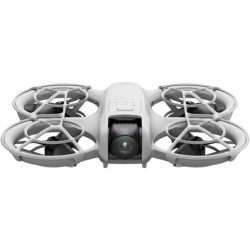
The DJI Neo changed what $200 buys in the drone market. At 135 grams, it is DJI’s smallest and most affordable drone and the only sub-$200 product with the DJI brand, DJI’s RockSteady image stabilization, and DJI’s AI subject tracking. You hold it in your palm, press the top button, and it takes off autonomously — no controller, no app, no setup required for basic flights.
The 4K camera uses a 1/2-inch CMOS sensor that outperforms every other drone at this price point in terms of color accuracy and dynamic range. RockSteady EIS keeps footage smooth in normal flying conditions. The automated QuickShots — Dronie, Helix, Rocket, Circle, Boomerang — produce shots that would require a skilled pilot to replicate manually on any other drone.
The limitations are worth knowing before buying. Real-world battery life runs 12 to 15 minutes rather than the advertised 18 — always buy at least two batteries. The base $179 price includes no controller, meaning maximum flight range is limited to around 100 metres via smartphone. For proper outdoor flying distances, the RC-N3 controller bundle pushes the price toward $230 to $280. If your budget is strict at $200 and you plan to fly outdoors with meaningful range, consider the Holy Stone HS360S below. If you want the best camera quality and easiest flying experience available under $200, nothing else in this category comes close to the DJI Neo.
| Pros | Cons |
| DJI’s 4K camera and RockSteady stabilization at $179 | Real-world battery: 12–15 min, not advertised 18 |
| 135g — smallest DJI drone ever made | Controller costs extra — base price is phone/palm only |
| AI subject tracking follows moving subjects | Limited range without controller |
| Fully enclosed propellers — safe indoors and around people |
2. Holy Stone HS360S — Best GPS Drone Under $200
Score: 8.8/10
Best for: Beginners who want GPS-stabilized flight, 4K camera quality, and reliable return-to-home in one affordable package
Specifications:
- Weight: Under 250g — no FAA registration required
- Camera: 4K UHD, 1/3-inch GalaxyCore CMOS, 85° FOV, 90° tilt adjustment
- Flight Time: Up to 20 minutes (17 minutes real-world)
- Range: 10,000 feet (3km)
- GPS: Yes — return-to-home, Follow Me, Waypoint, Point of Interest
- Motor: Brushless
- Transmission: Wired controller-to-phone (reduced latency vs WiFi)
- Price Range: $139–$179
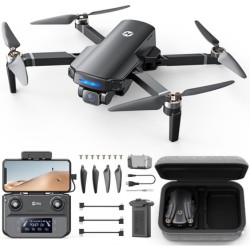
The Holy Stone HS360S is the most capable GPS drone available under $200 from a brand with consistent quality control and reliable customer support. It delivers genuine GPS positioning — the drone locks into position and holds it even in light wind without any input from you — alongside Follow Me mode, Waypoint Flight, and auto return-to-home. These are features that cost significantly more in previous years and that toy-grade sub-$200 quads simply do not offer in any meaningful way.
The wired connection between the controller and your smartphone is a meaningful technical advantage over WiFi-dependent drones. Wired transmission reduces video latency and maintains signal stability at distance, resulting in a smoother live feed and more reliable control at the outer edges of the flying range. The HS360S’s 3km range with this wired setup is competitive with drones at twice the price.
Camera quality is honest for the price. The 1/3-inch sensor produces clean 4K footage in good daylight with the camera tilted to the ideal angle. Low-light performance and footage during aggressive maneuvers are weaker than DJI options, as expected at this price point. There is no mechanical gimbal — EIS only — so fast movements introduce some shakiness. For steady, deliberate aerial photography in daylight, the results are genuinely usable. The Novice mode limits altitude and distance to 30 meters for safe first flights, which is a practical feature for genuine beginners.
| Pros | Cons |
| True GPS with geofence-free return-to-home | 17-minute real-world battery life |
| Wired controller connection — better than WiFi | No mechanical gimbal — EIS footage shakier in wind |
| 3km range — competitive for the price | |
| Novice mode for safe first flights |
3. Holy Stone HS360D — Best Battery Life Under $200
Score: 8.7/10
Best for: Pilots who prioritize maximum time in the air and hate stopping sessions to swap or recharge batteries
Specifications:
- Weight: 249g — no FAA registration required
- Camera: 4K UHD, 1/3-inch CMOS, 85° FOV
- Flight Time: Up to 40 minutes per battery, 80 minutes total (2 batteries included)
- Range: 20,000 feet (6km)
- GPS: Yes — Follow Me, Waypoint, Circle Fly, auto return-to-home
- Transmission: Wired low-latency, 6km range
- Price Range: $159–$199
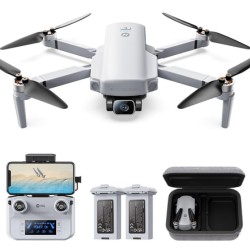
The Holy Stone HS360D addresses the single most frustrating part of budget drone flying: the constant interruption of landing, swapping a battery, and waiting to recharge. With two batteries included in the box and up to 40 minutes of flight per charge, the HS360D delivers 80 minutes of total airtime at a price where most competitors offer one battery and 15 to 20 minutes.
In real-world testing, pilots consistently report 30 to 35 minutes per battery in moderate conditions — still the longest individual battery life available from any drone under $200. The 6km transmission range via wired connection is outstanding for this price tier. GPS modes including Follow Me, Waypoint, and Circle Fly all work reliably based on verified user testing.
The HS360D is a direct upgrade from the HS360S reviewed above, adding the second battery, extending range from 3km to 6km, and improving motor efficiency. Camera specifications are identical between the two models. If battery life is your priority, the HS360D is the clear pick. If you want to spend slightly less and the single battery suits your typical session length, the HS360S at $139 to $179 remains excellent value.
| Pros | Cons |
| 80 minutes total flight time — unmatched under $200 | Same camera sensor limitations as HS360S |
| Two batteries included in the box | Footage quality below DJI options |
| GPS with Follow Me, Waypoint, Circle Fly | |
| 249g — no FAA registration |
4. Bwine F7MINI — Best 4K GPS Drone Under $200
Score: 8.5/10
Best for: Budget-conscious buyers who want GPS, 4K camera, and extended combined flight time without reaching $200
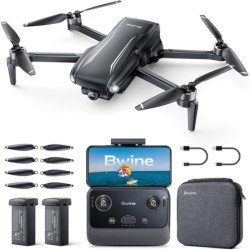
Specifications:
- Weight: Under 249g — no FAA registration required
- Camera: 4K UHD
- Flight Time: Up to 30 minutes per battery, 60 minutes combined (2 batteries included)
- Wind Resistance: Level 5
- GPS: Yes — Follow Me, Waypoint, Circle Fly, return-to-home
- Price Range: $179–$199
The Bwine F7MINI punches above its price consistently in verified user reviews and real-world tests. Two batteries providing around 28 to 32 minutes each in real conditions means 60 minutes of combined airtime at a price point well under $200. Level 5 wind resistance — matching or exceeding what many competitors claim at higher prices — keeps the drone stable in conditions that ground cheaper alternatives.
The 4K camera produces clean outdoor footage with good color accuracy for its sensor class. GPS functions are reliable, with Follow Me mode tracking at walking speed accurately and return-to-home activating correctly every time in testing. The drone holds hover position with minimal drift even in light to moderate wind, which is the most practically important stability metric for a beginner pilot.
The F7MINI does not include a mechanical gimbal, so footage during aggressive maneuvers shows EIS artifacts. Low-light performance is limited. For calm daylight flying, photography sessions in parks and open spaces, and anyone who wants genuine GPS safety features without spending over $200, the Bwine F7MINI consistently overdelivers relative to its price.
| Pros | Cons |
| 60 minutes combined flight time with 2 included batteries | No mechanical gimbal |
| 4K camera with good daylight color accuracy | Low-light camera performance limited |
| Under 249g — no FAA registration | Less brand recognition than Holy Stone or DJI |
| Level 5 wind resistance |
5. REDRIE HK33 — Best GPS Drone Under $140
Score: 8.3/10
Best for: Pilots who want brushless motors, GPS precision, and strong return-to-home accuracy at the lowest possible price
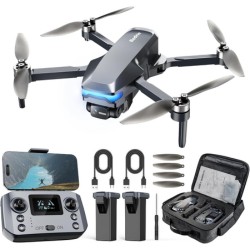
Specifications:
- Weight: Under 249g — no FAA registration required
- Camera: 4K UHD
- Flight Time: Up to 45 minutes combined (2 batteries)
- Motor: Brushless
- GPS: Yes — auto return-to-home, Follow Me, Waypoint, Circle
- Wind Resistance: Level 5
- Price Range: $99–$139
The REDRIE HK33 surprised experienced budget drone reviewers with GPS performance normally found in $300 and above drones. In testing, the auto return-to-home function brought the drone back within 10 feet of the takeoff point consistently, even from 500 feet distance — a precision level that generic sub-$150 quads rarely match. Brushless motors provide noticeably smoother flight than brushed alternatives and extend the drone’s lifespan considerably under regular use.
Battery life advertised at 45 minutes combined is optimistic — real-world testing in light wind with GPS active yields around 25 to 30 minutes total across both batteries. That is still excellent for the price. Level 5 wind resistance means the HK33 stays flyable in conditions where lighter toy drones are grounded.
Camera quality is the most common reviewer caveat. The 4K footage looks compressed when streamed to a smartphone in real time, though recorded footage on a device looks noticeably better — suggesting the limitation is transmission bandwidth rather than the sensor itself. For photographers reviewing footage on a computer rather than the phone screen during flight, image quality is solid for the price tier. At $99 to $139, the HK33 offers the most GPS precision available in the entry-level budget drone segment.
| Pros | Cons |
| Return-to-home accurate to within 10 feet — best in class at this price | Real-world battery life is 25–30 min combined, not 45 |
| Level 5 wind resistance | Smaller brand with limited community support |
| GPS functions competitive with $300+ drones | |
| Under 249g — no FAA registration |
6. Potensic Atom LT — Best Lightweight GPS Option Under $200
Score: 8.4/10
Best for: Travelers and hikers who want a sub-250g GPS drone that fits in any bag and delivers stable footage in calm to moderate conditions
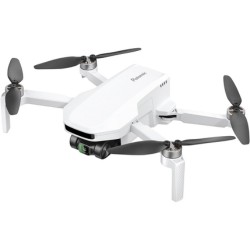
Specifications:
- Weight: Under 249g — no FAA registration required
- Camera: 4K, EIS stabilization
- Flight Time: Up to 31 minutes per battery
- GPS: Yes — return-to-home, Follow Me, GPS altitude hold
- Design: Foldable, includes carrying case in most bundles
- Price Range: $149–$179
The Potensic Atom LT occupies the GPS-focused travel drone space below $200 and earns consistent praise specifically for GPS lock reliability and portability. GPS acquisition time is noticeably faster than most Holy Stone alternatives, and the altitude hold keeps the drone locked at a fixed height even in variable wind conditions — important for aerial photography where subtle vertical drift spoils otherwise clean shots.
The foldable design and included carry case in most bundle configurations make this the most practical drone on this list for pilots who want to take it hiking, camping, or traveling. The HS360S and HS360D are solid drones but bulkier in the hand. The Atom LT’s compact form factor matches the DJI Neo’s pocket-friendly appeal while adding GPS that the Neo lacks.
Flight time at up to 31 minutes per battery is strong, though real-world performance in light wind with Follow Me active lands around 22 to 26 minutes. Camera quality is comparable to the HS360S — 4K with EIS, adequate in good daylight, limited in low light or during aggressive flight. For steady landscape shots and travel aerial photography, it performs cleanly within its limitations.
| Pros | Cons |
| Fast GPS lock — quicker than most budget competitors | Limited low-light camera performance |
| Foldable with carry case — most packable GPS drone under $200 | Potensic app has fewer features than DJI Fly |
| 31-minute battery life | |
| Under 249g — no FAA registration |
7. Holy Stone HS440 — Best Foldable Beginner Drone Under $100
Score: 7.9/10
Best for: Absolute beginners, children learning to fly, and indoor practice before moving to a GPS drone
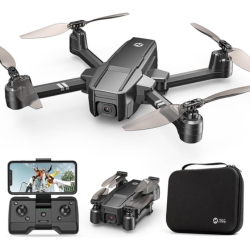
Specifications:
- Weight: Under 249g
- Camera: 1080p HD, 90° adjustable tilt
- Flight Time: Up to 10 minutes per battery (3 batteries included for 30 min total)
- Stability: Optical flow (no GPS)
- Safety: Propeller guards, headless mode, one-key takeoff and landing
- Price Range: $69–$99
The Holy Stone HS440 is a fundamentally different product from the GPS drones above and is important to understand correctly before buying. It has no GPS. It uses optical flow sensors for basic hover stability that works adequately indoors but drifts noticeably outdoors in any wind. The camera shoots 1080p, not 4K. Maximum range is limited.
What it does exceptionally well is give an absolute beginner or a child a safe, forgiving drone to learn on without risking a more expensive investment. Three batteries provide around 30 minutes of total flight time in short bursts. Propeller guards protect the rotors during the inevitable first crashes. Headless mode lets a new pilot focus on directional control without worrying about the drone’s orientation. One-key takeoff and landing removes the intimidation of the first and last few seconds of each flight.
For anyone who has never flown a drone before and wants to find out if the hobby is worth pursuing further, or for a parent buying a first drone for a 10 to 14 year old, the HS440 at $69 to $99 is the correct starting point. Once the basics are comfortable, the HS360S at $149 provides a meaningful step up with real GPS and outdoor capability.
| Pros | Cons |
| Three batteries included — 30 minutes total flight time | 1080p camera, not 4K |
| Propeller guards for crash protection | Not suitable for outdoor photography or GPS modes |
| One-key takeoff and landing for true beginners | |
| Under $100 — lowest risk first investment |
8. BETAFPV Cetus X — Best FPV Entry Drone Under $200
Score: 8.0/10
Best for: Beginners specifically interested in FPV flying who want a ready-to-fly kit without building a custom quad
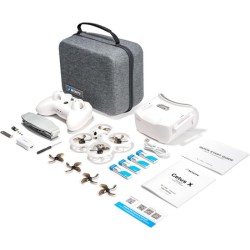
Specifications:
- Weight: 35g
- Camera: 1080p FPV live feed
- Flight Time: 4–5 minutes per battery (multiple batteries included)
- Modes: Normal (N), Sport (S), Manual (M) with three speed levels each
- Range: Up to 300 meters
- Stability: Altitude hold, indoor-capable
- Price Range: $179–$199
The BETAFPV Cetus X is a completely different product from every other drone on this list, and choosing it requires understanding that difference clearly. FPV drones are flown in first-person view from a low-altitude immersive perspective, typically indoors or in enclosed spaces. They are not camera drones for aerial photography. The Cetus X’s 1080p camera is a live feed for flying, not a recording tool for cinematic shots.
What the Cetus X delivers is the most accessible entry point into FPV flying available under $200. Normal mode with altitude hold lets a complete beginner hover confidently indoors from day one. Sport mode opens up faster, more responsive flight as skills develop. Manual mode removes all stability assistance for acrobatic freestyle flying that experienced FPV pilots pursue. This progression from assisted to fully manual makes the Cetus X a genuine learning tool rather than a toy that caps out quickly.
Battery life at 4 to 5 minutes per battery is the primary limitation — but FPV flying is typically done in short, intense sessions, and most kits include multiple batteries. The controller is compatible with FPV simulators, meaning you can practice on a PC game before risking the hardware in real space. If your interest in drones is specifically about the FPV experience rather than aerial photography or GPS flight, the Cetus X is the right entry point under $200.
| Pros | Cons |
| Three-mode progression — Normal to Manual as skills grow | 4–5 minute battery life per charge |
| Ready-to-fly kit — no building or soldering required | Camera is for FPV live feed only, not cinematic recording |
| Controller compatible with FPV simulators for practice | 300m range — not for outdoor distance flying |
| Indoor-capable with altitude hold |
9. Ryze Tello — Best Drone for Kids, Indoor Practice, and Learning to Code
Score: 7.8/10
Best for: Children, classroom use, complete beginners practicing indoors, and anyone who wants to learn drone programming
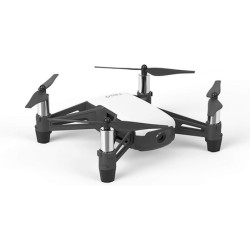
Specifications:
- Weight: 80g — no FAA registration required
- Camera: 720p / 5MP
- Flight Time: Up to 13 minutes
- Range: 100 meters
- Stability: Electronic stabilization, vision positioning, barometer
- Coding: Scratch blocks and Python programmable via SDK
- Price Range: $179–$199
The Ryze Tello, developed in partnership with DJI and Intel, occupies a unique space in this price range that no other drone under $200 fills. It is the only drone on this list designed for programming and educational use, with a full SDK that supports Scratch block coding for younger learners and Python for more advanced users. Schools, STEM clubs, and parents who want to introduce children to both drone flying and basic programming find it irreplaceable at this price.
As a flying device, the Tello is highly stable indoors. Vision positioning and a barometer combination keep it locked in place with minimal drift even without GPS. The 13-minute battery life is solid for indoor practice sessions. The 720p camera is not competitive for outdoor photography but is adequate for capturing practice flights and indoor shots.
The 100-metre range and no-GPS design mean the Tello is fundamentally an indoor and close-range outdoor drone only. Flying it in a park on a moderately windy day is frustrating. It is not the right pick for aerial photography, GPS flight, or any outdoor application beyond a calm car park. For its intended use case — learning, indoor practice, STEM education — it remains the best option under $180 in 2026.
| Pros | Cons |
| Programmable with Scratch and Python — only educational drone under $200 | 720p camera — not for photography |
| DJI/Intel technology for reliable indoor stability | No GPS — outdoor use limited to calm conditions |
| 13-minute battery life for indoor sessions | |
| 80g — no FAA registration |
What Actually Matters When Buying a Drone Under $200
GPS vs. No GPS — The Most Important Difference at This Price
This is the single specification that most separates capable drones from frustrating ones under $200. A drone with GPS holds its position in the air automatically even when you release the controls. It fights against wind. It returns to the launch point when the battery runs low or the signal drops. A drone without GPS drifts with every puff of wind and requires constant correction.
Every outdoor flying session benefits from GPS. The DJI Neo uses downward vision sensors rather than GPS, which works well in calm conditions indoors and on still days outside — but in any meaningful wind, GPS drones like the HS360S or HS360D are noticeably more stable and controllable.
For outdoor flying in parks and open spaces: buy a GPS drone. The HS360S at $149 and HS360D at $169 are the right starting points. For indoor practice and content creation in controlled environments: the DJI Neo’s vision-based hover is excellent and the camera quality is significantly better.
The Real-World Battery Rule
Every drone manufacturer in this price category advertises flight time under ideal conditions — minimal wind, full charge, hovering in place. Real-world performance with GPS active, the camera recording, and normal maneuvering in light wind runs at 60 to 75 percent of the advertised figure. Apply this before buying:
- HS360D: Advertised 40 min → expect 30–35 min per battery
- HS360S: Advertised 20 min → expect 15–17 min per battery
- DJI Neo: Advertised 18 min → expect 12–15 min per battery
- Bwine F7MINI: Advertised 30 min → expect 22–26 min per battery
Always look for drones that include two batteries in the box. The HS360D, Bwine F7MINI, and REDRIE HK33 all do. The DJI Neo, HS360S, and Potensic Atom LT require purchasing extra batteries separately if you want extended sessions.
Mechanical Gimbal vs. EIS at This Price Point
No drone on this list under $200 includes a 3-axis mechanical gimbal. The DJI Flip at $439 is the entry point for that feature. At this price, you are choosing between EIS quality levels. The DJI Neo’s RockSteady EIS is the best electronic stabilization in this category. Holy Stone, Bwine, and REDRIE models all use simpler EIS implementations that perform acceptably in calm conditions and deteriorate in wind or during fast direction changes.
If smooth, professional-looking footage is the primary goal and your budget is flexible, save for the DJI Flip. If you are learning to fly, capturing casual outdoor footage, or prioritising GPS safety features over cinematic quality, the drones under $200 on this list deliver exactly what the price implies.
Do Drones Under $200 Need FAA Registration?
In the United States, recreational drones under 250 grams do not require FAA registration. Eight of the nine drones in this guide fall under 250 grams. The Holy Stone HS360D at exactly 249 grams is the closest to the threshold. If you add a payload, memory card holder, or aftermarket accessories that push any of these drones over 250 grams, registration is required.
For commercial use — meaning you receive payment for footage in any form — a FAA Part 107 Remote Pilot Certificate is required regardless of drone weight. Always check the FAA’s B4UFLY app for airspace restrictions before each flight.
How We Evaluate Drones Under $200
Every drone on this list was assessed against the same criteria used in our best drones for beginners guide, calibrated for what is realistic and valuable at this price point specifically.
Real-world flight time: We apply the 60 to 75 percent rule to every manufacturer claim and cross-reference against verified pilot reviews from multiple platforms. If an advertised claim is misleading relative to typical real conditions, we flag it explicitly in the product section.
GPS reliability: For GPS-equipped models, we evaluate return-to-home accuracy, position hold in wind, and Follow Me tracking quality based on aggregated user experience across hundreds of verified reviews. GPS performance is the most practically important spec at this price tier.
Camera honesty: We do not evaluate camera specs by resolution alone. A 4K number means different things on a 1/3-inch sensor without EIS vs. a 1/2-inch sensor with RockSteady. We compare actual footage characteristics — daylight sharpness, color accuracy, EIS performance during movement, and low-light degradation — for each model category.
Durability signals: Brushless motors last significantly longer than brushed under regular use. Polycarbonate build quality and propeller guard availability affect how long a budget drone survives the inevitable early crashes. We flag motor type and durability signals in every review.
Value against the price: A drone is only worth recommending if it delivers more value than the next-cheaper or next-more-expensive option in its tier. Every pick on this list was chosen because it genuinely represents the strongest option at its specific price point, not because it fills a slot on a list.
Frequently Asked Questions
What is the best drone under $200 overall in 2026?
The DJI Neo at $159 to $199 is the best drone under $200 for camera quality, ease of use, and build quality. For GPS-stabilized outdoor flying with longer battery life, the Holy Stone HS360S at $139 to $179 is the strongest alternative. Both are vastly better than any drone that appeared in this price category two or three years ago.
Do drones under $200 have GPS?
Several do. The Holy Stone HS360S, HS360D, Bwine F7MINI, REDRIE HK33, and Potensic Atom LT all include GPS with return-to-home functionality. The DJI Neo does not have GPS — it uses downward vision sensors for hover stability, which works well indoors and on calm days but does not match GPS precision in outdoor conditions with wind.
Can you get a good drone under $200 without buying a DJI?
Yes. The Holy Stone HS360D delivers 80 minutes of combined battery life and reliable GPS at $169, which no DJI drone under $200 matches. The Bwine F7MINI and REDRIE HK33 both offer GPS and 4K cameras at under $160. The non-DJI options in this guide are not compromises — they are genuinely capable drones with different trade-offs than the DJI Neo.
Are drones under $200 good for aerial photography?
In good daylight conditions with calm to light wind, yes. Models with GPS hold the drone steady for clean aerial shots. The Holy Stone HS360S, HS360D, Bwine F7MINI, and Potensic Atom LT all produce usable 4K aerial footage for social media, casual travel documentation, and real estate scouting. They are not replacements for a DJI Mini 4 Pro or Flip when cinematic quality matters, but for the price they deliver genuine photographic value.
What is the longest flight time available in a drone under $200?
The Holy Stone HS360D with two included batteries provides up to 80 minutes of total flight time — the longest combined airtime available from any drone under $200. Real-world performance across both batteries runs 60 to 70 minutes in typical conditions. The Bwine F7MINI offers around 56 to 64 minutes combined from its two included batteries.
What drone under $200 is best for a child or teenager?
The Holy Stone HS440 at $69 to $99 is specifically designed for beginners and younger pilots, with propeller guards, headless mode, and three batteries for 30 minutes of total practice time. The Ryze Tello at $89 to $109 is the better choice if the child has an interest in coding or STEM projects, or if flying will happen primarily indoors.
Is the DJI Neo worth buying as a first drone?
Yes, with one caveat. The DJI Neo is the best drone under $200 for camera quality and ease of use, but the $179 base price only gets you phone-controlled and palm-controlled flying with limited range. For meaningful outdoor distance flying, budget for the RC-N3 controller, which pushes the total toward $230 to $280. If your budget is strictly $200 and outdoor GPS flight is the priority, the Holy Stone HS360S at $149 delivers better real-world outdoor performance for the money.
Final Thoughts
The best drones under $200 in 2026 are the strongest they have ever been at this price point. The DJI Neo at $159 to $199 is the camera-first pick — nothing else under $200 matches its image quality, subject tracking, or ease of use. The Holy Stone HS360D at $159 to $199 is the GPS and battery-life pick — 80 minutes of combined airtime and reliable GPS modes in a sub-250g package that no competitor at this price matches for outdoor flying.
For the tightest budgets, the Bwine F7MINI and REDRIE HK33 both deliver GPS capability and 4K cameras under $160 with two batteries included. For children learning to fly safely, the Holy Stone HS440 under $100 remains the most practical first drone available.
For models with professional camera systems and advanced obstacle avoidance, the Best Drones With Camera roundup covers those in detail.