
Checked against current budget smartwatch models on November 5, 2026.
A $30 smartwatch with a heart rate monitor, blood oxygen, 100 sport modes and a 30 day battery sounds like a bargain. Then the app crashes, notifications stop syncing and the battery lasts four days. Most budget smartwatch problems are not defects; they are buying mistakes that come from trusting the listing instead of checking the details. Here are the seven we see most often and how to avoid them.
Short answer: buy from an established brand with a reliable app, check that it works with your phone, expect battery life well below the box claim, treat health readings as trends, and look for 5 ATM if you want to swim. Under $50, our top picks are the Xiaomi Smart Band 10 and the Amazfit Bip S Lite.
Key points
- The app matters as much as the watch; unknown brands often have weak or abandoned apps.
- Check iPhone or Android support before anything else.
- Real battery life is usually well below the advertised number.
- Budget health data shows trends, not medical readings.
- IP68 is not a swim rating; look for 5 ATM or higher.
The 7 Mistakes at a Glance
| Mistake | What happens | What to do instead |
|---|---|---|
| Choosing looks over basics | Dim screen, laggy touch, cheap strap | Check brightness, display type and strap |
| Ignoring compatibility | Missing notifications or features | Confirm iPhone or Android support |
| Expecting medical accuracy | Misleading health numbers | Treat readings as trends |
| Trusting the battery claim | Charging twice as often as expected | Expect about half the claim with heavy use |
| Underestimating the app | Sync failures, no updates | Pick brands with well rated apps |
| Believing every box claim | Swimming kills the watch | Read water and GPS specs carefully |
| Not matching the user | Wrong size or features | Buy for the wearer’s real needs |
Mistake 1: Choosing Looks Over Real Features
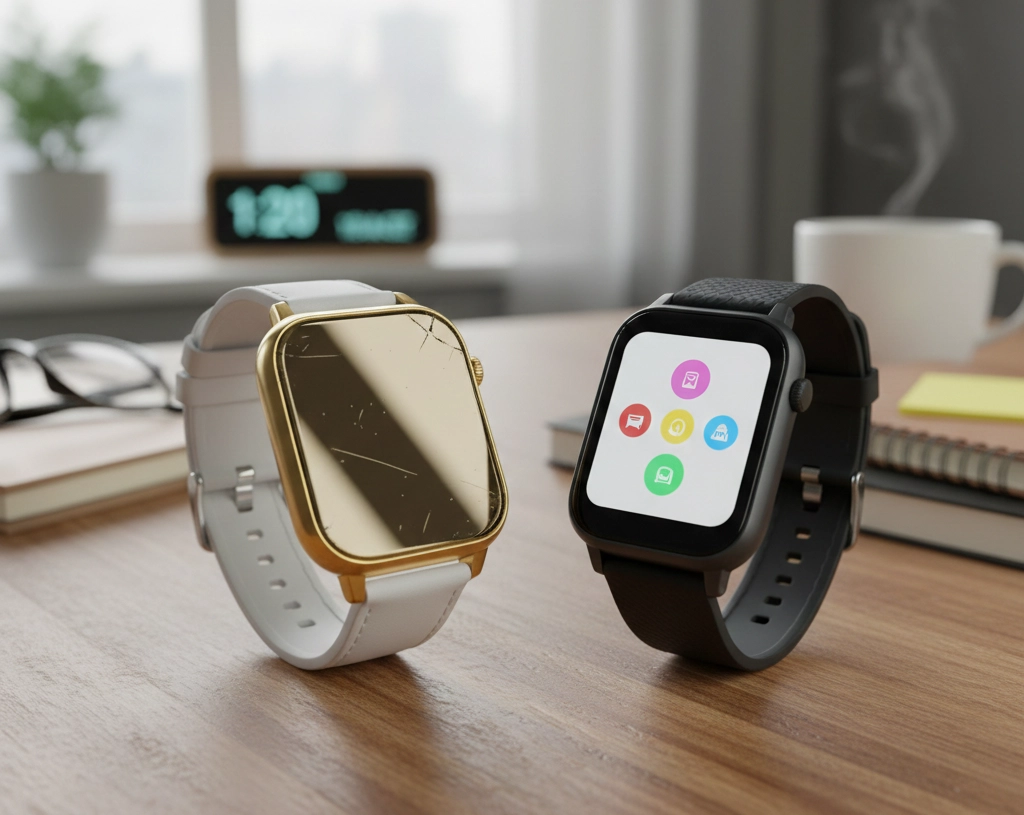
Budget listings lean on photos of metal looking cases and huge screens. In daily use, what matters is whether the screen is readable outdoors, the touch response is quick and the strap stays comfortable. An AMOLED display is easier to read and usually a sign of a better built watch.
Mistake 2: Ignoring Phone Compatibility Before Buying
Most budget watches work with iPhone and Android through their own app, but features differ. iPhone users usually get notifications without replies, and some apps have poor ratings on one platform. Check the app’s rating in your phone’s app store before you buy, not after.
Mistake 3: Expecting Medical Grade Health Tracking
Budget watches use the same type of optical sensor as premium ones, but cheaper sensors and simpler software make the data less precise, especially during workouts. Blood oxygen and especially blood pressure readings on cheap watches are estimates, not clinical measurements.
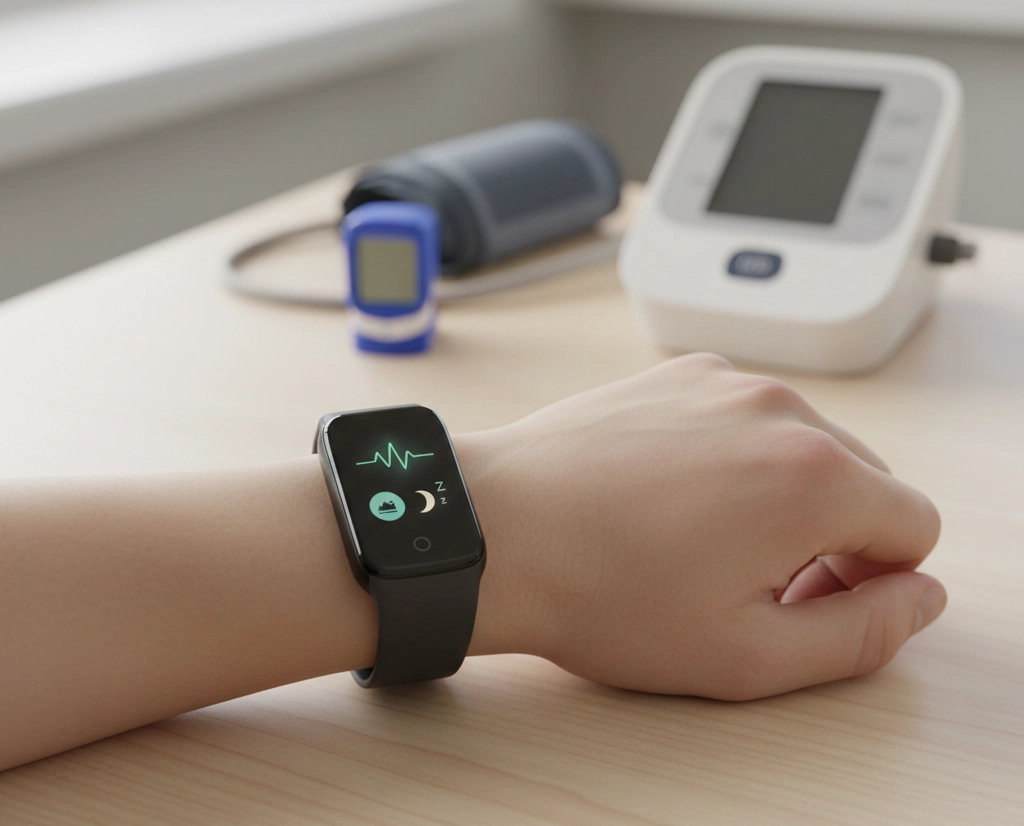
Use the numbers to spot trends in sleep and resting heart rate. If you need real blood pressure or heart rhythm readings, use a medical device or talk to your doctor.
Mistake 4: Overlooking Real Battery Life
Battery claims assume the lowest settings. With notifications, continuous heart rate and normal brightness, expect roughly half the advertised life, sometimes less. A good budget watch still lasts a long time: our author Vlatko Avramoski has used an Amazfit Bip S Lite for almost two years and charges it about every two weeks.
Mistake 5: Underestimating the Companion App
The app is where your data lives. Established brands such as Xiaomi (Mi Fitness), Amazfit (Zepp) and Huawei (Huawei Health) update their apps regularly and keep syncing reliable. Many unknown brands share generic apps that get few updates, so syncing can break after a phone update.
Mistake 6: Believing Every Feature Claim on the Box
“Waterproof” usually means IP68, which covers rain and splashes, not swimming. “GPS” often means connected GPS that borrows your phone’s signal. “100+ sport modes” mostly means labels for your workout log. Read the actual ratings: 5 ATM for swimming and “built in GPS” for runs without your phone.
Mistake 7: Buying Without Matching the Watch to the User
A watch that suits a runner may be wrong for a child or an older parent. Think about who will wear it: small wrists need a slim case, kids need GPS location and parent controls, and older users benefit from large text and fall detection. For children, see our kids smartwatches with GPS.
What a Budget Smartwatch Can Really Do
| Feature | Budget reality | Good for | Limit |
|---|---|---|---|
| Heart rate | Reliable trends at rest | Daily awareness | Less accurate in intense workouts |
| Sleep tracking | Total sleep and patterns | Building habits | Stage detail is rough |
| GPS | Often uses your phone | Casual walks and runs | Carry your phone for accuracy |
| Water rating | Often IP68, some 5 ATM | Daily wear, some swimming | Check before swimming |
| Battery | About 1 to 2 weeks in real use | Low maintenance | Drops with heavy use |
Our team’s budget pick
Vlatko Avramoski has worn the Amazfit Bip S Lite for almost two years. Battery life of about two weeks is its strong side; the lack of built in GPS is its weak side, so it relies on your phone for pace and distance. See all our budget picks under $50.
FAQs: Low Cost Smartwatches
Are cheap smartwatches reliable long term?
Models from established brands such as Xiaomi, Amazfit and Huawei usually last two years or more with regular app updates. Unknown brands often stop updating their apps, which can break syncing even if the watch still works.
Do budget smartwatches work with iPhones?
Most budget watches from established brands work with both iPhone and Android, but iPhone users usually see notifications only, without replies. Check the app’s iOS rating before you buy.
Can I swim with a cheap smartwatch?
Only if it is rated 5 ATM or higher and the maker lists swimming. Many budget watches carry only IP68, which covers rain and handwashing, not swimming.
Is the heart rate on a cheap smartwatch accurate?
It is usually close enough for resting heart rate and daily trends, but less reliable during intense workouts. Blood oxygen and blood pressure readings on budget watches are estimates, not medical measurements.
Do budget smartwatches come with a warranty?
Established brands list a clear warranty and a support contact, and Amazon’s return window covers early problems. Many unknown Amazon brands list neither, which is another reason to avoid them.
What is the best smartwatch under $50?
Our top pick is the Xiaomi Smart Band 10 for its bright AMOLED screen, long battery and reliable app. See our full list of the best smartwatches under $50 for more options.
Final Thoughts
A low cost smartwatch can be great value if you buy from a brand with a solid app, check compatibility, read the water rating and expect real world battery life. Skip the listings that promise everything for $25. For the specs worth checking one by one, read our inexpensive smartwatch buying guide.
Related Guides
- Smartwatch vs fitness tracker
- How to choose the right smartwatch
- Inexpensive smartwatch buying guide
- All smartwatch reviews
Our Smartwatch Reviews
- Best smartwatches for women
- Best smartwatches for men
- Best Android smartwatches for texting and calling
- Best waterproof fitness smartwatches for swimming
- Best smartwatches under $50
- Best waterproof smartwatches for kids with GPS
Update history. November 5, 2026: updated this guide with a mistakes table, current budget picks from established brands, notes from Vlatko’s two years with the Amazfit Bip S Lite, a clearer water rating and GPS explainer, an updated budget reality table and FAQs. Removed an external link and kept the original images.