Choosing the best drone with a camera has never been more exciting — or more confusing. The gap between a $250 camera drone and a $2,500 one has narrowed dramatically over the past two years, and the specs that actually separate good aerial footage from great aerial footage are not the ones most listings lead with.
The best drones with a camera in 2026 span from the $249 DJI Mini 4K — a genuinely capable 4K GPS drone that fits in a jacket pocket — all the way to the DJI Mavic 4 Pro with a 100-megapixel Hasselblad triple-camera system that captures 6K footage in D-Log. Between those two extremes is where most buyers actually live, and where the most important buying decisions happen.
This guide covers 8 camera drones across every meaningful price tier, evaluated on real image quality, flight performance, camera sensor size, obstacle avoidance capability, and long-term value. Every product is currently available, currently relevant, and represents the best choice in its price bracket for 2026.
8 Best Drones With Camera 2026 — Quick Comparison Table
| # | Drone | Price Range | Weight | Sensor | Best For |
|---|---|---|---|---|---|
| 1 | DJI Mavic 4 Pro Best Overall |
$2,199–$2,699 | 1,063g | 4/3″ Hasselblad | Best professional camera drone |
| 2 | DJI Mini 5 Pro | $1,099–$1,708 | 249g | 1-inch CMOS | Best compact camera drone overall |
| 3 | DJI Air 3S | $1,099–$1,349 | 723g | 1-inch + 1/1.3″ | Best dual-camera mid-range drone |
| 4 | DJI Mini 4 Pro | $759–$959 | 249g | 1/1.3-inch CMOS | Best all-rounder for most buyers |
| 5 | DJI Flip | $439–$499 | 249g | 1/1.3-inch CMOS | Best budget camera drone under $500 |
| 6 | Autel EVO Nano+ | $449–$649 | 249g | 1/1.28-inch CMOS | Best non-DJI camera drone |
| 7 | Potensic Atom 2 | $349–$499 | 249g | 1/2-inch CMOS | Best budget non-DJI with gimbal |
| 8 | DJI Mini 4K | $249–$299 | 249g | 1/2-inch CMOS | Best entry-level camera drone |
Note: Pricing checked on Amazon and may vary by region or promotion.
1. DJI Mavic 4 Pro — Best Professional Camera Drone in 2026
Score: 9.6/10
Best for: Professional cinematographers, commercial content creators, and serious aerial photographers who require the best image quality available in a consumer drone
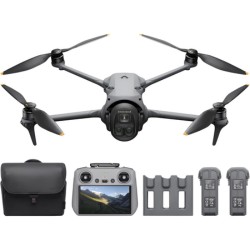
Specifications:
- Weight: 1,063g (FAA registration required)
- Camera System: Triple — 4/3″ Hasselblad CMOS (100MP, f/2.0–f/11 adjustable), 1/1.3″ 3x tele (48MP), 1/1.5″ 7x tele (50MP)
- Video: 6K/60fps HDR, 4K/120fps, 10-bit D-Log M
- Flight Time: Up to 51 minutes
- Range: 30km (O4+ transmission)
- Obstacle Sensing: Omnidirectional with LiDAR
- Gimbal: Infinity Gimbal — 360° rotation, 70° upward tilt
- Price Range: $2,199–$2,699
Released in May 2025, the DJI Mavic 4 Pro is the most capable consumer camera drone ever made and the current benchmark against which every other drone in this category is measured. The Hasselblad 4/3-inch main sensor captures 100-megapixel stills and 6K/60fps video in Hasselblad Natural Color Solution — color science that took decades to develop and that no other consumer drone manufacturer can replicate. The adjustable aperture from f/2.0 to f/11 gives pilots the same depth-of-field and exposure control that cinema cameras provide, making it uniquely suited to professional commercial work.
The Infinity Gimbal is a genuine mechanical innovation. A full 360-degree rotation with 70-degree upward tilt unlocks shooting angles that require purpose-built camera rigs on any other platform — Dutch angles, sweeping overhead transitions, straight-up verticals. Combined with the 51-minute battery life and 30km O4+ transmission range, this is a drone that lets a professional pilot focus entirely on the creative work rather than managing the hardware.
The two telephoto lenses — a 70mm medium tele and a 168mm long tele — provide optical zoom reach that no sub-$2,000 drone approaches. Wildlife photography, real estate, sports coverage, and cinematic travel content all benefit from the ability to compress perspective at genuine optical focal lengths rather than digital crop.
The Mavic 4 Pro is not for everyone. At over a kilogram it requires FAA registration, it costs more than most hobbyist budgets allow, and it is substantially more drone than a casual creator needs. For professional commercial work where the footage quality is the product, nothing available in 2026 competes with it.
| Pros | Cons |
| 100MP Hasselblad sensor with Hasselblad Natural Color Solution | 1,063g requires FAA registration |
| Infinity Gimbal — 360° rotation opens unique creative angles | Heavier and less portable than mini-class drones |
| 51-minute flight time — longest in consumer class | Overkill for casual photography |
| 6K/60fps HDR in D-Log M for professional color grading |
2. DJI Mini 5 Pro — Best Compact Camera Drone Overall
Score: 9.4/10
Best for: Travel creators, landscape photographers, and pilots who want near-professional image quality without FAA registration requirements
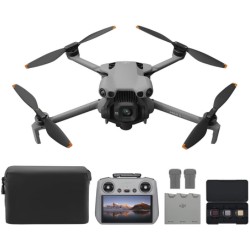
Specifications:
- Weight: 249g (no FAA registration required for recreational use)
- Camera: 1-inch CMOS, 50MP, f/1.8 aperture, 24mm equivalent
- Video: 4K/60fps HDR, 4K/100fps slow motion, 10-bit D-Log M
- Flight Time: 36 minutes (standard) / 52 minutes (Intelligent Battery Plus)
- Range: 25km
- Obstacle Sensing: Omnidirectional with forward-facing LiDAR
- Gimbal: Rotating — true vertical shooting, 225° barrel roll capability
- Internal Storage: 42GB
- Price Range: $1,099–$1,708
Released in September 2025, the DJI Mini 5 Pro is the most significant leap forward in the sub-250g drone category since the category was defined. A 1-inch CMOS sensor — previously exclusive to heavier, more expensive drones — delivers image quality that rivals the DJI Air 3S in daylight conditions and surpasses the Mini 4 Pro in every measurable camera metric. The f/1.8 aperture provides exceptional low-light performance that makes this the first mini drone capable of genuinely useful dusk and dawn photography without heavy post-processing.
Forward-facing LiDAR for obstacle sensing in low light is a safety advancement that no previous sub-250g drone offered. The Mini 5 Pro can return to home accurately in near-darkness, reading its flight path through the LiDAR sensor when camera-based vision systems lose effectiveness. Combined with the 42GB internal storage — a jump from the Mini 4 Pro’s 2GB — this is a drone designed to be taken anywhere without preparation anxiety.
The rotating gimbal supports 225-degree barrel rolls and true vertical shooting, enabling native portrait-orientation 4K video for social media without software cropping. 4K/100fps slow motion opens cinematic capabilities that previously required the Air 3S or above. At 249 grams, it stays under the FAA registration threshold while delivering specs that would have required a 700g drone two years ago.
| Pros | Cons |
| 1-inch sensor in a 249g drone — unprecedented at this weight | Wind performance below heavier drones despite strong specs |
| 4K/100fps slow motion | Single camera — no optical zoom |
| Up to 52 minutes with extended battery | |
| 42GB internal storage |
3. DJI Air 3S — Best Mid-Range Drone With Dual Camera
Score: 9.2/10
Best for: Travel content creators, real estate pilots, and intermediate photographers who need a dual-camera system and professional-grade video in a portable form
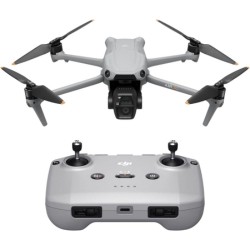
Specifications:
- Weight: 723g (FAA registration required)
- Camera System: Dual — 1-inch CMOS wide-angle (50MP, 4K/120fps) + 1/1.3-inch 3x medium tele (48MP)
- Video: 4K/120fps, 10-bit D-Log M, 14 stops dynamic range
- Flight Time: Up to 45 minutes
- Range: 20km (O4 transmission)
- Obstacle Sensing: Omnidirectional APAS 5.0
- Price Range: $1,099–$1,349
The DJI Air 3S sits at the critical intersection of professional capability and manageable price for the working content creator. Its dual-camera system — a 1-inch wide-angle and a 1/1.3-inch 3x medium telephoto — provides native optical zoom that the Mini 5 Pro cannot replicate. The ability to switch between a wide landscape shot and a compressed 3x telephoto without moving the drone unlocks compositional flexibility that changes how aerial footage looks and what a pilot can achieve on a single flight.
The 1-inch sensor’s 4K/120fps capability means the Air 3S produces the highest frame-rate footage available from any drone with a 1-inch sensor in this price range. Slow-motion drone footage at 4K/120fps, graded from D-Log M with 14 stops of dynamic range, produces results competitive with professional cinema camera rigs at a fraction of the weight and cost. The 45-minute battery life sustains longer creative sessions than any other drone at this price tier.
Compared to the Mini 5 Pro, the Air 3S trades the sub-250g regulatory simplicity for the dual-camera system, heavier wind stability, and longer flight time. For pilots who primarily fly outdoors in varied conditions and who value focal length flexibility, the Air 3S is the stronger choice. For pilots who travel internationally and prize regulatory simplicity above all else, the Mini 5 Pro is the better pick.
| Pros | Cons |
| 4K/120fps in D-Log M — best slow motion in this price range | 723g requires FAA registration |
| 45-minute flight time | No true vertical shooting (must crop) |
| Best wind resistance at the mid-range price point | Heavier and less compact than Mini series |
| Omnidirectional APAS 5.0 obstacle avoidance |
4. DJI Mini 4 Pro — Best All-Round Camera Drone for Most Buyers
Score: 9.1/10
Best for: The widest range of buyers — beginners with higher budgets, enthusiasts, travel photographers, and content creators who want excellent camera performance without professional pricing
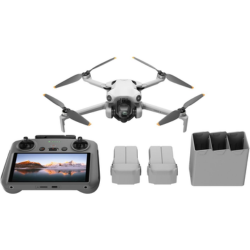
Specifications:
- Weight: 249g (no FAA registration required)
- Camera: 1/1.3-inch CMOS, 48MP, 4K/60fps HDR
- Video: 4K/60fps HDR, 10-bit D-Log M, true vertical shooting
- Flight Time: Up to 34 minutes (47 minutes with Intelligent Battery Plus — note: exceeds 250g)
- Range: 20km (O4 transmission)
- Obstacle Sensing: Omnidirectional
- Price Range: $759–$959
The DJI Mini 4 Pro remains the most recommended drone in any price discussion for one simple reason: it delivers every feature that the vast majority of aerial photographers and video creators actually use, in a 249g package that requires no FAA registration, at a price that is genuinely competitive in the current market.
Omnidirectional obstacle sensing means the Mini 4 Pro actively detects and avoids objects in every direction — the feature that separates a drone that survives its first year from one that does not. Combined with 4K/60fps HDR in D-Log M, the footage quality matches what mid-range drones costing twice as much produced in 2022. The rotating gimbal enables true vertical 4K shooting for social media without the quality loss of cropping a landscape sensor.
The Mini 4 Pro has been superseded by the Mini 5 Pro in pure camera performance, but the $340 price gap is significant. For buyers who do not need the 1-inch sensor, 4K/100fps, or LiDAR from the Mini 5 Pro, the Mini 4 Pro remains an outstanding purchase in 2026 that will produce professional-looking footage for years. It is the most sensible recommendation for first-time buyers with a $700 to $800 budget.
| Pros | Cons |
| 4K/60fps HDR in D-Log M — pro-grade color profile | No 4K/120fps slow motion |
| True vertical shooting with rotating gimbal | Intelligent Battery Plus pushes over 250g |
| 249g — no FAA registration for recreational use | |
| 20km O4 transmission range |
5. DJI Flip — Best Camera Drone Under $500
Score: 8.9/10
Best for: Budget-conscious buyers, vertical content creators, beginners who want DJI image quality without paying Mini 4 Pro pricing
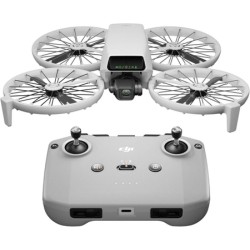
Specifications:
- Weight: 249g (no FAA registration required)
- Camera: 1/1.3-inch CMOS, 48MP, 4K/60fps HDR — same sensor as Mini 4 Pro
- Video: 4K/60fps HDR, D-Log M, optimized vertical shooting
- Flight Time: Up to 31 minutes
- Range: 10km (O4 transmission)
- Obstacle Sensing: Forward and downward sensors
- Propeller Guards: Integrated folding guards
- Price Range: $439–$599
The DJI Flip uses the exact same 1/1.3-inch CMOS sensor as the DJI Mini 4 Pro. The image quality — the footage color, sharpness, dynamic range, and HDR performance — is identical between the two drones. This makes the DJI Flip the most underrated camera drone in 2026. For $320 less than the Mini 4 Pro, you get the same video output.
The trade-off is obstacle sensing coverage. The Flip has forward and downward sensors only — no sideways or rear detection. For pilots who fly deliberately, approach obstacles from the front, and are willing to be slightly more cautious in tight spaces, this limitation is manageable. The integrated folding propeller guards make the Flip one of the safest drones around people and the most practical for indoor flying, events, and close-proximity shooting.
The Flip is optimized specifically for vertical social media content — Instagram Reels, TikToks, YouTube Shorts — with flight modes and aspect ratio presets built around portrait orientation. Palm launch and landing work without controller setup. For a solo content creator, vlogger, or travel blogger who wants genuine DJI camera quality at the lowest DJI price, the Flip is the correct buy.
| Pros | Cons |
| Same 1/1.3-inch sensor and image quality as Mini 4 Pro at $320 less | Forward and downward obstacle sensing only |
| Palm launch and landing without controller setup | 10km range vs 20km on Mini 4 Pro |
| Optimized vertical shooting for social media | |
| Integrated folding propeller guards — safest drone around people |
6. Autel EVO Nano+ — Best Non-DJI Camera Drone
Score: 8.6/10
Best for: Pilots who want DJI-competitive performance from a US-based manufacturer, and those who specifically prioritize low-light camera quality
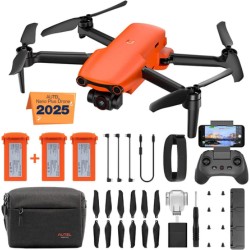
Specifications:
- Weight: 249g (no FAA registration required)
- Camera: 1/1.28-inch CMOS, 50MP, f/1.9 adjustable aperture, 4K/30fps
- Video: 4K/30fps, HDR, 4K slow motion
- Flight Time: Up to 28 minutes
- Range: 10km
- Obstacle Sensing: Forward, rear, and downward
- Price Range: $449–$649
The Autel EVO Nano+ is the most credible non-DJI camera drone at the sub-250g weight class. Its 1/1.28-inch sensor with f/1.9 adjustable aperture delivers the best low-light performance of any drone under $700, including the DJI Mini 4 Pro. Sunset shots, early morning flights, and any aerial photography in reduced ambient light produce noticeably cleaner results from the Nano+ than from DJI alternatives at the same price.
Autel is a US-headquartered company. For commercial operators, government contractors, or pilots who have concerns about DJI’s Chinese manufacturing in the context of ongoing US regulatory discussions, the Nano+ is the only sub-250g drone that genuinely competes with DJI on image quality without the DJI brand. The Autel Sky app is less polished than DJI Fly but fully functional, and Autel’s customer support and parts availability in the US are strong.
The f/1.9 adjustable aperture is a feature DJI reserves for its most expensive models. Having aperture control on a 249g drone is genuinely useful for experienced photographers who want to manage depth of field and exposure with the same intent they apply on ground-based cameras. At $449, the Nano+ offers a strong value case for buyers whose primary goal is the best possible low-light stills and video from a compact drone.
| Pros | Cons |
| Best low-light performance in the sub-250g category | DJI Fly app is more polished than Autel Sky |
| Front, rear, and downward obstacle sensing | 4K limited to 30fps vs 60fps on DJI alternatives |
| 249g — no FAA registration | |
| 50MP CMOS sensor with strong dynamic range |
7. Potensic Atom 2 — Best Budget Non-DJI Camera Drone With 3-Axis Gimbal
Score: 8.3/10
Best for: Budget buyers who want a genuine 3-axis mechanical gimbal and sub-250g GPS flight without paying DJI pricing
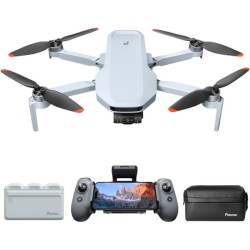
Specifications:
- Weight: 249g (no FAA registration required)
- Camera: 1/2-inch CMOS, 4K/30fps, 3-axis mechanical gimbal
- Flight Time: Up to 32 minutes
- Range: 4km
- GPS: Yes — return-to-home, Follow Me, orbit
- Controller: Built-in screen controller (no phone required)
- Price Range: $349–$499
The Potensic Atom 2 is the most compelling non-DJI budget camera drone in 2026 for one specific reason: it includes a genuine 3-axis mechanical gimbal at a price where most competitors use electronic image stabilization. A mechanical gimbal physically stabilizes the camera against the drone’s movement using motors — it produces smooth footage during acceleration, banking, and directional changes in a way that EIS simply cannot replicate. At $349 to $499, no other drone offers this combination.
The 2026 Atom 2 redesign added a built-in screen controller that eliminates the need to mount a smartphone, which solves one of the most consistent frustrations with budget drones in the $300 price range. This alone makes the setup experience significantly more convenient than mounting a phone, connecting via app, and managing display brightness in daylight.
The 1/2-inch sensor produces clean 4K footage in good daylight conditions. Low-light performance is weaker than the DJI Mini 4 Pro or Autel Nano+, and 4km range is noticeably shorter than DJI alternatives at this price. For buyers specifically drawn to the 3-axis gimbal and the non-DJI brand, the Atom 2 delivers genuine value. For buyers who prioritize range, sensor quality, or ecosystem depth, the DJI Flip is the stronger choice at a similar price point.
| Pros | Cons |
| 3-axis mechanical gimbal — smooth footage no EIS alternative matches | 4km range — shorter than DJI options |
| 32-minute flight time | Low-light performance limited |
| GPS with return-to-home, Follow Me, orbit modes | |
| Sub-250g — no FAA registration |
8. DJI Mini 4K — Best Entry-Level Camera Drone
Score: 8.5/10
Best for: First-time drone buyers who want real DJI GPS camera performance at the lowest DJI price available
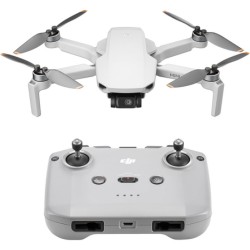
Specifications:
- Weight: 249g (no FAA registration required)
- Camera: 1/2-inch CMOS, 12MP, 4K/30fps
- Video: 4K/30fps, 2.7K/30fps
- Flight Time: Up to 31 minutes
- Range: 10km (O2 transmission)
- GPS: Yes — return-to-home, QuickShots, GPS hover
- Gimbal: 3-axis mechanical
- Price Range: $249–$299
The DJI Mini 4K is the most important drone on this list for buyers on the tightest budget. At $249 to $299, it is the cheapest drone DJI makes with a 3-axis mechanical gimbal, GPS, a 4K camera, and the DJI Fly app ecosystem. For a first drone buyer who wants to learn GPS flying, practice aerial photography, and produce social-media quality footage without spending $500 or more, the Mini 4K is the correct starting point.
The 1/2-inch sensor produces 4K/30fps footage that is clean in good daylight and shows color accuracy and stability that no budget competitor at this price level matches. The 3-axis gimbal means footage stays smooth during normal flight maneuvers — a meaningful difference from EIS-based alternatives that cost the same. 31-minute flight time gives substantive practice sessions. O2 transmission at 10km is more than adequate for recreational flying.
The Mini 4K’s limitations are honest and predictable for the price. No obstacle avoidance of any kind means you are fully responsible for keeping the drone clear of trees, buildings, and other obstacles. No D-Log or 10-bit color profile means post-production grading flexibility is limited. 4K is capped at 30fps. These are the exact trade-offs that justify the $500 step to the DJI Flip or the $760 step to the Mini 4 Pro. But as an entry camera drone, the Mini 4K is genuinely difficult to recommend against.
| Pros | Cons |
| 31-minute flight time | No obstacle avoidance at all |
| 10km O2 transmission range | 4K capped at 30fps |
| Under 249g — no FAA registration | |
| DJI Fly app with QuickShots |
How to Choose the Right Camera Drone — Buying Guide
Camera Sensor Size: The Most Important Spec Most Listings Bury
The camera sensor size determines image quality more than any other single specification. Bigger sensors capture more light, produce better dynamic range, and perform significantly better in low-light conditions. Here is how the current 2026 lineup maps:
| Sensor Size | Drones | What It Delivers |
|---|---|---|
| 4/3-inch | DJI Mavic 4 Pro | Maximum dynamic range, color science, pro cinema quality |
| 1-inch | DJI Mini 5 Pro, DJI Air 3S (wide) | Excellent low-light, wide dynamic range, film-grade results |
| 1/1.3-inch | DJI Mini 4 Pro, DJI Flip, Autel Nano+ | Strong daylight and moderate low-light, clear 4K quality |
| 1/2-inch | DJI Mini 4K, Potensic Atom 2 | Good daylight, limited low-light, adequate for social media |
If aerial photography is a serious creative pursuit, buying one sensor tier higher than your minimum requirement pays dividends over the full life of the drone.
Mechanical Gimbal vs. Electronic Image Stabilization
Every drone on this list uses a mechanical 3-axis gimbal. This is what separates camera drones from toy quads with a camera strapped on. A mechanical gimbal physically isolates the camera from the drone’s movement using motorized axes, keeping the horizon level and the frame smooth during acceleration, banking, turns, and flight corrections.
Electronic Image Stabilization crops and warps the digital image to compensate for movement. It works adequately in calm conditions but fails noticeably during fast movements, in moderate wind, and whenever the drone makes sudden direction changes. When evaluating a drone under $300 that is not on this list, confirming whether it has a mechanical or electronic gimbal is the most important question to ask.
Obstacle Avoidance: What It Actually Does for a Pilot
Obstacle avoidance does not make a drone impossible to crash — it makes crashing significantly harder. The practical value depends on the coverage:
- Omnidirectional (DJI Mavic 4 Pro, Mini 5 Pro, Mini 4 Pro, Air 3S): Detects obstacles in front, behind, above, below, and to the sides. The most forgiving for new pilots and complex environments.
- Forward and downward (DJI Flip): Protects against the most common crash scenarios — flying into something in front of you and descending into objects below.
- No obstacle sensing (DJI Mini 4K): You are the obstacle avoidance system. Flyable safely with situational awareness and deliberate flying.
For beginners, omnidirectional sensing justifies its price premium in the first month of flying alone. For experienced pilots flying in open environments, forward sensing is typically sufficient.
FAA Registration and the 250g Rule
In the United States, recreational drones under 250 grams do not require FAA registration. Six of the eight drones on this list weigh 249 grams. The DJI Air 3S at 723g and the DJI Mavic 4 Pro at 1,063g both require registration, which costs $5 and takes five minutes online.
For commercial flying — any situation where you receive payment for footage — a Part 107 Remote Pilot Certificate is required regardless of drone weight. Always verify airspace restrictions using the FAA’s B4UFLY app before every flight.
D-Log and 10-Bit Color: What It Means for Footage Quality
D-Log is DJI’s flat color profile that captures a wider range of tones and gives video editors maximum flexibility in post-production. Footage shot in D-Log looks flat and desaturated on the drone’s screen but contains far more recoverable shadow and highlight detail than standard color profiles. 10-bit color depth records more color information per pixel than 8-bit, resulting in smoother gradients and better performance in color grading.
Every drone on this list from the DJI Flip upward supports D-Log M in 10-bit. The DJI Mini 4K does not. If color-graded cinematic footage is important to you, D-Log support is the spec that defines the minimum viable drone for your needs.
How We Evaluate Camera Drones at Tigeristic
Our camera drone evaluations follow the same framework across every review, with specific criteria weighted to reflect what matters in real aerial photography and video work.
Sensor quality in real conditions: We evaluate camera performance in daylight, overcast light, and late-afternoon conditions — not just the best-case screenshots manufacturers use in press materials. Footage is assessed for color accuracy, shadow and highlight detail, noise levels at distance, and EIS or gimbal performance during typical flight maneuvers.
Real-world flight time: Every claimed flight time is discounted against verified pilot reports from multiple sources. A drone advertised at 43 minutes that consistently delivers 30 in real use gets scored on 30 minutes. We flag the discrepancy explicitly in every review.
Obstacle avoidance in practice: Omnidirectional sensing, forward-only sensing, and no sensing are each genuinely different safety propositions. We describe what each means in practice for a pilot — not just whether the checkbox is ticked on the spec sheet.
Value within the price tier: A drone is only worth recommending if it delivers the strongest combination of camera quality, flight safety, and reliability at its specific price point. We compare each drone against its nearest competitors above and below in price, not just against drones in completely different categories.
Regulatory compliance: Every drone on this list is currently available for purchase and legal to fly recreationally in the United States as of April 2026. We flag FAA registration requirements, Remote ID compliance, and any known regulatory restrictions clearly in each review.
Frequently Asked Questions
What is the best drone with a camera for beginners in 2026?
The DJI Mini 4 Pro at $759 is the best camera drone for beginners who want excellent image quality and safe omnidirectional obstacle sensing. The DJI Flip at $439 is the best camera drone for beginners on a tighter budget — same sensor as the Mini 4 Pro, forward sensing only, $320 cheaper. The DJI Mini 4K at $249 is the entry point if budget is the primary constraint.
What is the best camera drone under $500?
The DJI Flip at $439 is the strongest camera drone under $500 in 2026. It uses the same 1/1.3-inch sensor as the $759 DJI Mini 4 Pro, shoots 4K/60fps in D-Log M, and produces footage that is visually indistinguishable from its more expensive sibling in most shooting conditions.
Do I need to register my drone with the FAA?
Only if it weighs 250 grams or more for recreational flying. Six of the eight drones on this list weigh 249 grams and do not require registration. The DJI Air 3S and Mavic 4 Pro both require registration. For any commercial use, Part 107 certification is required regardless of weight.
What is the difference between the DJI Mini 5 Pro and Mini 4 Pro?
The Mini 5 Pro adds a 1-inch sensor (vs 1/1.3-inch on Mini 4 Pro), 4K/100fps slow motion, forward-facing LiDAR for low-light obstacle sensing, 42GB internal storage (vs 2GB), and a barrel roll gimbal capability. The Mini 5 Pro’s image quality is meaningfully better in low light and in dynamic range. The price gap between them is roughly $340 at entry level.
Is the DJI Mavic 4 Pro worth the price?
For professional commercial work — cinematography, high-end real estate, weddings, travel content agencies — yes. The Hasselblad triple-camera system, Infinity Gimbal, and 51-minute flight time deliver capabilities no other consumer drone can match. For a hobbyist or enthusiast, the Mini 5 Pro or Air 3S deliver 90% of the visual results at 40 to 50% of the price.
Can I use a camera drone for real estate photography?
Yes, and aerial photography is one of the most practical commercial drone applications. Any drone on this list with a mechanical gimbal and 4K camera produces footage suitable for property listings. For commercial real estate work in the US, a Part 107 certificate is required regardless of drone weight. The DJI Air 3S’s dual-camera system is particularly useful for real estate because the 3x telephoto lens allows compressed shots of property facades from a respectful distance.
What is the best non-DJI camera drone in 2026?
The Autel EVO Nano+ at $449 to $649 is the strongest non-DJI camera drone under $700. Its 1/1.28-inch sensor with f/1.9 adjustable aperture delivers the best low-light performance in the sub-250g category and comes from a US-headquartered company. The Potensic Atom 2 at $349 to $499 is the best non-DJI option if a 3-axis gimbal and price are the primary priorities.
Final Thoughts
The best drones with a camera in 2026 cover every realistic budget and use case. For most buyers — enthusiasts, travelers, and content creators who want the strongest all-around drone without professional pricing — the DJI Mini 4 Pro remains the benchmark recommendation. It has everything a serious hobbyist needs, weighs 249 grams, and produces footage that holds up at any size you display it.
If the budget stretches to $1,099, the DJI Mini 5 Pro is the upgrade that makes the most sense: a 1-inch sensor in the same 249g body, with LiDAR sensing and 4K/100fps slow motion that genuinely opens new creative possibilities.
For buyers who want DJI image quality at the lowest possible price, the DJI Flip at $439 is the most undervalued drone on this list — same sensor as the Mini 4 Pro, same D-Log quality, $320 less.
For professional commercial work where the footage is the product, the DJI Mavic 4 Pro is the only drone currently available that delivers Hasselblad color science, triple optical zoom, and an Infinity Gimbal in a consumer package.
For beginners still deciding whether aerial photography is worth pursuing, start with the Best Drones for Beginners guide for a complete breakdown of entry-level options and flying fundamentals. For the best GPS camera drones under $200, see our Best Drones Under $200 roundup.