
Buying your first drone in 2026 should be straightforward. The technology has improved dramatically. Modern beginner drones stabilize themselves, hold GPS position, avoid obstacles, and return home automatically. A first-time pilot can be airborne in under ten minutes straight out of the box.
The problem is the market. There are hundreds of drones listed as “beginner friendly” across every price point, and most of them are not. Toy-grade quads with 5-minute battery life and no GPS get sold alongside genuinely capable machines, and the spec sheets are written to blur the difference. A drone you crash on day one because it drifts in a light breeze, has no return-to-home function, or produces footage too shaky to watch is not a beginner drone regardless of what the listing claims.
This guide covers the 10 best drones for beginners in 2026 — selected based on real flight performance, stability in the hands of new pilots, regulatory compliance in the US, honest battery life, and camera quality that matches what the price implies. Every product has been cross-referenced against verified pilot reviews, current availability, and up-to-date pricing.
10 Best Drones For Beginners 2026 — Quick Comparison
| # | Smartwatch | Weight | Best For |
|---|---|---|---|
| 1 | DJI Mini 4 Pro Best Overall |
249g | Best overall beginner drone |
| 2 | DJI Flip | 249g | Best budget DJI with vertical video |
| 3 | DJI Neo 2 | 151g | Best ultra-budget and indoor option |
| 4 | DJI Avata 2 | 377g | Best FPV starter drone |
| 5 | Potensic Atom SE | 245g | Best non-DJI budget GPS drone |
| 6 | Autel EVO Nano+ | 249g | Best DJI alternative |
| 7 | Holy Stone HS360D | 249g | Best budget with 80-min total flight time |
| 8 | Holy Stone HS360S | 249g | Best entry-level GPS drone under $200 |
| 9 | DJI Air 3S | 723g | Best step-up for intermediate beginners |
| 10 | HoverAir X1 | 125g | Best selfie and follow drone, no controller needed |
1. DJI Mini 4 Pro — Best Overall Beginner Drone in 2026
Score: 9.4/10
Best for: First-time pilots who want a drone that will stay relevant as their skills grow
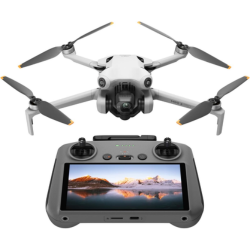
Specifications:
- Weight: 249g (no FAA registration required for recreational flying)
- Camera: 4K/60fps HDR, 48MP, 1/1.3-inch CMOS sensor
- Flight Time: Up to 34 minutes (Intelligent Flight Battery Plus: 47 min, note: exceeds 250g)
- Range: 20km (O4 video transmission)
- Obstacle Sensing: Omnidirectional
- Wind Resistance: Level 5 (38 km/h)
- Gimbal: 3-axis mechanical
- Price: From $759
The DJI Mini 4 Pro remains the benchmark beginner drone in 2026 for a simple reason: it forgives mistakes in ways no competitor at its weight class does. Omnidirectional obstacle sensing means the drone detects and avoids objects in every direction — front, back, sides, up, and down. For a pilot learning to navigate around trees, buildings, or other obstacles, this is not a gimmick, it is the feature that prevents a $759 machine from becoming a $759 pile of plastic in week one.
At 249 grams, it sits right at the FAA registration threshold for recreational flyers in the US. The 3-axis mechanical gimbal produces footage that stays smooth even in moderate wind — a meaningful advantage over electronic image stabilization alternatives that struggle when the drone banks or accelerates. Real-world flight time runs 25 to 30 minutes per charge with the standard battery, which gives you proper practice sessions rather than the 10 to 15 minutes you get from cheaper options.
ActiveTrack 360 lets the drone follow a moving subject while automatically avoiding obstacles, and the rotating gimbal enables true vertical shooting for social media without software cropping. For anyone who wants one drone that they will not outgrow in 6 months, the Mini 4 Pro is the answer.
| Pros | Cons |
| Omnidirectional obstacle sensing — genuinely crash-resistant | Intelligent Flight Battery Plus pushes weight over 250g |
| 3-axis gimbal delivers smooth footage in wind | No AirSense transponder included |
| Under 249g — no FAA registration for recreational use | |
| 20km transmission range on O4 |
2. DJI Flip — Best Budget DJI Drone for Beginners
Score: 9.0/10
Best for: Beginners on a tighter budget who want DJI quality and vertical video capability
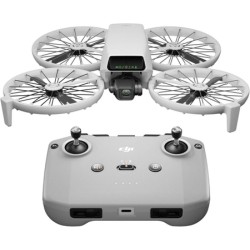
Specifications:
- Weight: 249g
- Camera: 4K/60fps HDR, 48MP, 1/1.3-inch CMOS sensor
- Flight Time: Up to 31 minutes
- Range: 10km (O4 video transmission)
- Obstacle Sensing: Downward and forward only
- Wind Resistance: Level 5
- Gimbal: 3-axis mechanical
- Price: From $439
The DJI Flip launched in late 2024 and immediately became the most compelling entry point in DJI’s lineup for budget-conscious beginners. For $320 less than the Mini 4 Pro, you get the same 1/1.3-inch sensor, the same 4K/60fps HDR footage quality, the same 31-minute flight time, and the same O4 transmission system. The image quality gap between the Flip and the Mini 4 Pro is essentially zero.
What the Flip trades away is obstacle sensing coverage. It has downward and forward sensors but no sideways or rear detection. For a beginner, this means you need to be more deliberate about your flight path — approach obstacles from the front where the drone can see them, and avoid flying backwards quickly until you know your environment. This is a skill worth building anyway, and at $439 the Flip is a more teachable drone for many new pilots than spending $759 on a machine that does all the avoiding for you.
The Flip also includes integrated propeller guards that fold out with the arms, making it safer to fly around people and genuinely usable indoors for practice. Palm launch and landing work reliably. For vertical content creators specifically, the Flip’s optimized shooting modes and lightweight design make it one of the best travel drones available at any price.
| Pros | Cons |
| Same sensor and image quality as Mini 4 Pro | No side or rear obstacle sensing |
| Integrated propeller guards for indoor and around-people flying | Shorter range than Mini 4 Pro (10km vs 20km) |
| Palm launch and landing | |
| True vertical shooting optimized for social media |
3. DJI Neo 2 — Best Ultra-Budget Beginner Drone
Score: 8.7/10
Best for: Absolute beginners, indoor practice, and pilots who want to try drones before committing to a higher budget
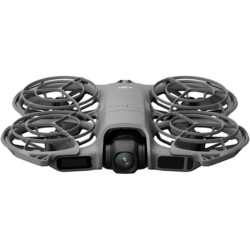
Specifications:
- Weight: 151g (well under 250g threshold)
- Camera: 4K/60fps, 4K/100fps slow motion
- Flight Time: Up to 19 minutes advertised (9–13 minutes real-world)
- Obstacle Sensing: Omnidirectional (monocular vision + forward LiDAR + downward IR)
- Control: Smartphone, palm gestures, or optional RC-N3 controller ($99–$199 extra)
- Price: From $249 drone-only; $399 Fly More Combo with RC-N3 controller recommended
The DJI Neo 2 is the most beginner-friendly drone DJI has ever made, and the $249 entry price makes it the lowest-cost route into the DJI ecosystem. At 151 grams it is well under the FAA registration threshold, has fully enclosed propellers that make it safe to fly indoors and around people, and takes off from the palm of your hand without any controller setup.
Omnidirectional obstacle avoidance on a $249 drone is genuinely impressive. The Neo 2 uses monocular vision sensors, forward-facing LiDAR, and downward infrared sensing to detect obstacles in all directions — a feature that costs significantly more on competing models. For indoor practice and learning basic flight movements, this makes the Neo 2 nearly impossible to crash into objects.
There are two important caveats. First, real-world battery life runs 9 to 13 minutes in typical conditions, not the advertised 19. This is the biggest practical limitation. Second, the drone-only $249 price gives you smartphone and palm control with a maximum range of around 100 meters. To get proper flying range and controller-based inputs that actually teach real piloting skills, you need the Fly More Combo with RC-N3 at $399. Budget for that from day one.
| Pros | Cons |
| Enclosed propellers — safe indoors and around people | Real-world battery life is 9–13 minutes, not advertised 19 |
| 151g — no FAA registration needed | Controller sold separately to fly meaningful distances |
| Palm takeoff and landing | |
| 4K/100fps slow motion |
4. DJI Avata 2 — Best FPV Drone for Beginners
Score: 8.8/10
Best for: Beginners specifically interested in FPV flying who want a safe, ready-to-fly setup
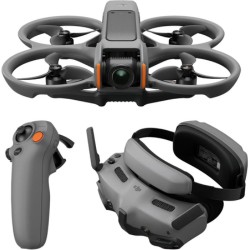
Specifications:
- Weight: 377g
- Camera: 4K/60fps, 155° FOV, 1/1.3-inch CMOS sensor
- Flight Time: Up to 23 minutes
- Range: 13km (O4 video transmission)
- Obstacle Sensing: Downward visual + ToF
- Control: DJI Goggles 3 + RC Motion 3 (included in combo)
- Price: From $629 (Fly More Combo recommended)
FPV flying is a fundamentally different experience from flying a standard GPS camera drone. Where a regular drone hovers in place and corrects for wind automatically, FPV drones respond instantly to every stick input and fly at full throttle through the air like a first-person racing game. Most FPV drones are built for experienced pilots and require significant manual skill before they become controllable.
The DJI Avata 2 is the exception. It is the only FPV drone designed specifically to be approachable for beginners, and it accomplishes this without compromising the immersive experience that makes FPV worth pursuing in the first place. Normal mode gives you stability-assisted flying that will not let the drone tip past safe angles. Manual mode opens up full acrobatic control as your skills develop. The DJI Goggles 3 provide a genuine first-person view with crisp, low-latency video. Return-to-home, auto-hover, and emergency braking all work reliably.
The 155-degree field of view captures cinematic FPV footage that looks similar to professional drone racing content. The 1/1.3-inch sensor produces excellent image quality for an FPV platform. If your interest in drones is specifically around immersive flying and FPV-style footage rather than photography or standard aerial shots, the Avata 2 is the only beginner-appropriate path into that world.
| Pros | Cons |
| Only truly beginner-friendly FPV drone available | 377g requires FAA registration |
| Normal mode provides stability for new pilots | FPV flying requires more practice than GPS drones |
| 4K/60fps with wide 155° FOV | |
| DJI Goggles 3 provide genuine immersive experience |
5. Potensic Atom SE — Best Non-DJI Budget Drone
Score: 8.5/10
Best for: Budget-conscious beginners who want GPS stability and decent camera quality without the DJI price tag
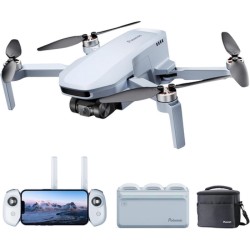
Specifications:
- Weight: 245g (no FAA registration required)
- Camera: 4K/30fps, EIS, 12MP
- Flight Time: Up to 31 minutes
- Range: 4km
- Gimbal: 2-axis EIS
- Wind Resistance: Level 5
- GPS: Yes, with return-to-home
- Price: From $249
The Potensic Atom SE is the strongest non-DJI option in the budget beginner drone market. At $249 it undercuts the DJI Flip by $190 while delivering GPS-stabilized flight, 31-minute battery life, level 5 wind resistance, and a reliable return-to-home function. For a new pilot learning basic maneuvers in a park or open field, the Atom SE provides everything that matters.
The camera uses Electronic Image Stabilization rather than a mechanical gimbal, which means footage quality drops noticeably when the drone accelerates, banks, or flies in moderate wind. This is the trade-off that separates the Atom SE from DJI options at higher price points. If you plan to primarily capture slow, smooth aerial shots and learn to fly before investing more, the EIS limitation is manageable. If smooth cinematic footage is the primary goal from day one, stretch to the DJI Flip.
The ShakeVanish EIS technology performs better than typical budget EIS implementations and produces usable 4K footage in calm to light wind conditions. GPS lock is reliable, the companion app works consistently, and the foldable design is genuinely pocketable at 245 grams. For anyone who wants a capable first drone at the lowest sensible price, the Atom SE remains the best non-DJI option in 2026.
| Pros | Cons |
| 31-minute flight time matches DJI Flip | Footage quality drops in wind and during maneuvers |
| Level 5 wind resistance | 4km range vs 10-20km on DJI options |
| Sub-250g — no FAA registration | |
| Reliable GPS and return-to-home |
6. Autel EVO Nano+ — Best DJI Alternative for Serious Beginners
Score: 8.6/10
Best for: Beginners who want DJI-grade performance without buying into the DJI ecosystem
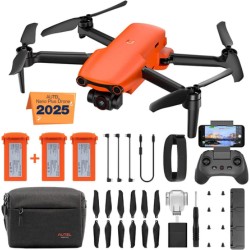
Specifications:
- Weight: 249g (no FAA registration required)
- Camera: 4K/30fps, 50MP, 1/1.28-inch CMOS sensor
- Flight Time: Up to 28 minutes
- Range: 10km
- Obstacle Sensing: Front, rear, and downward
- Aperture: f/1.9 (adjustable)
- Price: From $549
The Autel EVO Nano+ is the most serious DJI alternative available for beginner pilots in 2026, and it earns that status through its camera. The 1/1.28-inch sensor with an f/1.9 aperture produces genuinely better low-light performance than any DJI option at the same weight class. Sunset shots, golden hour footage, and any flying in reduced light look noticeably cleaner from the Nano+ than from the Mini 4 Pro or Flip.
For pilots in the US who have concerns about DJI’s Chinese manufacturing given ongoing legislative discussions about drone regulations, the Autel EVO Nano+ is the only sub-250g drone that competes directly with DJI on camera quality and flight performance. Autel is a US-based company with R&D operations outside China, which matters to some buyers in professional or government-adjacent contexts.
Front, rear, and downward obstacle sensing covers the primary flight directions a beginner will use. The PDAF and CDAF autofocus system tracks moving subjects accurately. The Autel Sky app is less polished than DJI Fly but functional and stable. At $549, the Nano+ sits between the DJI Flip and Mini 4 Pro on price while offering a camera sensor that arguably beats both in specific shooting conditions.
| Pros | Cons |
| Best low-light performance in the sub-250g category | Autel Sky app less polished than DJI Fly |
| US-based company — alternative to DJI ecosystem | No side obstacle sensing |
| 10km range matches DJI Flip | |
| Sub-250g — no FAA registration |
7. Holy Stone HS360D — Best Budget Drone With Extended Flight Time
Score: 8.2/10
Best for: Beginners on a tight budget who want to maximize time in the air without spending over $200
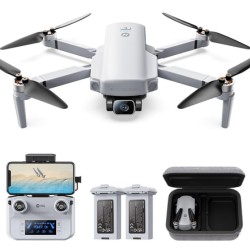
Specifications:
- Weight: 249g (no FAA registration required)
- Camera: 4K, 1/3-inch CMOS sensor, 85° FOV
- Flight Time: Up to 40 minutes per battery, 80 minutes total with 2 included batteries
- Range: 20,000 feet (6km)
- GPS: Yes, with return-to-home, Follow Me, Waypoint, Circle Fly
- Transmission: Wired controller-to-phone (reduced latency vs WiFi)
- Price: From $179
The Holy Stone HS360D solves the single biggest frustration for new drone pilots: running out of battery after 15 minutes. With two batteries included and up to 40 minutes of flight per charge, the HS360D offers 80 minutes of total airtime at a price where DJI charges $249 for a drone with a 9 to 13 minute real-world battery life. For extended outdoor sessions, photography hikes, or anyone who finds frequent battery swaps disruptive to the learning process, this is the standout budget option.
At 249 grams it clears the FAA registration threshold for recreational flyers. The wired connection between the remote controller and smartphone — unlike WiFi-dependent alternatives — reduces video latency and improves transmission stability at distance. The 4K camera uses a 1/3-inch CMOS sensor, which is smaller than DJI sensors and produces softer footage particularly in low light, but delivers acceptable quality for social media and casual aerial photography in daylight.
Smart GPS modes including Follow Me, Waypoint Flight, and Circle Fly are all functional and reliable. The HS360D is a significant upgrade from the HS360S it replaces, adding the second battery pack and extending transmission range to 6km. For anyone whose primary concern is maximizing flight time on a limited budget, no drone under $200 comes close.
| Pros | Cons |
| Two batteries included in the box | Camera quality noticeably below DJI options |
| Wired controller connection reduces latency | No obstacle sensing |
| 6km transmission range | |
| Sub-250g — no FAA registration |
8. Holy Stone HS360S — Best Entry-Level GPS Drone Under $150
Score: 7.9/10
Best for: Absolute beginners who want GPS and 4K for the lowest possible price before committing to a larger investment
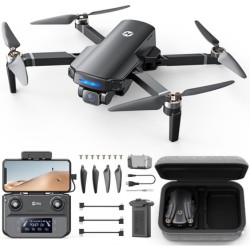
Specifications:
- Weight: Under 250g (no FAA registration required)
- Camera: 4K, 1/3-inch CMOS, 85° FOV, adjustable tilt
- Flight Time: Up to 20 minutes
- Range: 10,000 feet (3km)
- GPS: Yes, return-to-home, Follow Me, Waypoint
- Motor: Brushless
- Price: From $149
The Holy Stone HS360S is the most accessible GPS drone with a 4K camera currently available and a reliable entry point for pilots who are not yet ready to invest $249 or more. The wired smartphone connection, brushless motors, and GPS-assisted return-to-home distinguish it from the toy-grade quads that dominate the sub-$150 market and make first flights frustrating.
Flight time at around 17 minutes in real-world conditions is shorter than the HS360D above, and the camera shares the same sensor limitations — no mechanical gimbal, soft footage in wind, and weak low-light performance. The HS360S is honestly not the drone to shoot cinematic footage with. It is the drone to learn GPS flight, practice positioning, try Follow Me mode, and build pilot confidence without risking a larger investment.
For families where a child or teenager wants to try drone flying, or for any buyer who wants to understand whether drones are worth pursuing before spending $400 or more, the HS360S earns its place. The Novice mode limits altitude and distance to 30 meters, creating a safe practice envelope for absolute first flights.
| Pros | Cons |
| Most affordable GPS + 4K drone in this guide | 17-minute real-world battery life |
| Brushless motors more durable than brushed | No gimbal — footage shakier than higher-priced options |
| Novice mode limits distance for safe first flights | |
| Under 250g — no FAA registration |
9. DJI Air 3S — Best Drone When You Are Ready to Step Up
Score: 9.1/10
Best for: Beginners with a larger budget or pilots planning to progress to intermediate level within 6 months
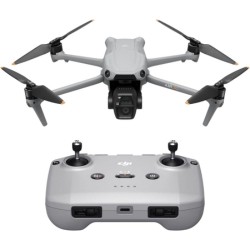
Specifications:
- Weight: 723g (FAA registration required)
- Camera: 4K/120fps, 10-bit D-Log M, dual cameras (wide + 3x tele), 14 stops dynamic range
- Flight Time: Up to 45 minutes
- Range: 20km (O4 video transmission)
- Obstacle Sensing: Omnidirectional with APAS 5.0
- Gimbal: 3-axis mechanical
- Price: From $1,099
The DJI Air 3S is not a starter drone by price, but it belongs on this list for two groups of beginners: those who have a larger budget and want to skip the entry tier entirely, and those who know from day one that they want to grow into serious aerial photography or videography.
The dual-camera system — a wide-angle primary and a 3x medium telephoto — provides creative flexibility that single-camera drones cannot match. The 4K/120fps slow-motion capability and 10-bit D-Log M color profile are features that experienced creators actually use and that beginner drones simply do not offer. If you are a photographer or videographer by background and are adding a drone to an existing creative workflow, the Air 3S makes sense as a first drone because you will not outgrow it.
The 45-minute battery life is the longest of any drone in this guide. Omnidirectional APAS 5.0 obstacle avoidance is the most advanced collision prevention system available in a foldable consumer drone. At 723 grams it requires FAA registration, which adds a minor administrative step but is straightforward and costs $5 for recreational flyers.
| Pros | Cons |
| 4K/120fps and 10-bit D-Log M for serious videographers | 723g — requires FAA registration |
| 45-minute battery — longest in this guide | $1,099 — significant investment for a first drone |
| Omnidirectional APAS 5.0 obstacle avoidance | |
| Will not need replacing as skills grow |
10. HoverAir X1 — Best Drone for Selfies and Action Footage With No Controller
Score: 8.3/10
Best for: Solo content creators, hikers, and action sports users who want autonomous follow footage without carrying a controller
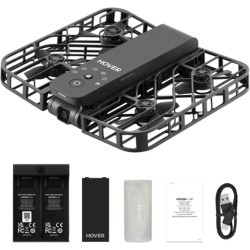
Specifications:
- Weight: 125g (well under FAA threshold)
- Camera: 4K/30fps, 2.7K/60fps
- Flight Time: Up to 11 minutes
- Control: Pocket launch — no controller, no app setup required
- Obstacle Sensing: Downward
- Gimbal: 3-axis electronic stabilization
- Modes: Follow Me, Hover, Zoom Out, Bird’s Eye, Orbit
- Price: From $349
The HoverAir X1 is a fundamentally different device from every other drone in this guide. There is no remote controller. You pull it out of your pocket, hold it in your palm, and it takes off automatically. It flies a pre-set autonomous shot — following you, orbiting, zooming out — and lands back in your hand when finished. The entire operation takes seconds.
For solo travelers, hikers, mountain bikers, and anyone who wants to capture footage of themselves in motion without setting up a tripod, carrying a controller, or asking someone else to film, the X1 fills a genuine gap. The autonomous follow mode tracks a subject reliably across varied terrain and keeps pace with moving subjects at walking and jogging speeds. The foldable design fits in a jacket pocket at 125 grams.
Battery life at 11 minutes is the primary limitation. You are not using this for extended landscape photography sessions. It is a shot-specific tool — launch, capture one sequence, land, pocket it. For its intended purpose it works exceptionally well, and the quality of autonomous footage it produces would require a skilled human pilot and a separate camera operator to replicate with a traditional drone setup.
| Pros | Cons |
| 125g — no FAA registration, flies almost anywhere | 11-minute battery life |
| Autonomous follow modes work reliably | Camera quality below DJI at this price |
| Perfect for solo content creators on the move |
What to Look For When Buying Your First Drone
Start With the 250g Rule
In the United States, drones under 250 grams do not require FAA registration for recreational flying. This single specification removes administrative steps, opens up more flying locations, and simplifies the legal picture considerably for new pilots. Seven of the ten drones in this guide weigh under 250 grams. Unless you have a specific reason to go heavier — like the Air 3S’s dual-camera system — start sub-250g.
Mechanical Gimbal vs. Electronic Image Stabilization
This is the most misunderstood spec difference in consumer drones. A 3-axis mechanical gimbal physically isolates the camera from the drone’s movement using motors, producing smooth footage regardless of how the drone maneuvers. Electronic Image Stabilization (EIS) is software-based and works acceptably in calm conditions but degrades noticeably when the drone accelerates, tilts in wind, or makes quick direction changes.
For beginners who want footage worth watching: mechanical gimbal. The DJI Mini 4 Pro, Flip, Air 3S, and Autel EVO Nano+ all have mechanical gimbals. The Neo 2, Potensic Atom SE, Holy Stone models, and HoverAir X1 use EIS.
FAA Registration and Remote ID
Drones 250 grams and above require FAA registration for recreational use in the US. Registration costs $5 and is valid for three years. All new drones — regardless of weight — sold after September 2023 are required to have Remote ID, which broadcasts the drone’s location to authorities. All drones in this guide are Remote ID compliant.
Real-World vs. Advertised Battery Life
Manufacturers test battery life in ideal conditions with no wind, full charge, and minimal active features. Real-world performance with moderate wind, GPS active, and video recording running is typically 60 to 75 percent of the advertised figure. When you see “34 minutes” for the DJI Mini 4 Pro, expect 25 to 30 minutes in practice. When the DJI Neo 2 claims 19 minutes, expect 9 to 13 minutes. Always apply the 60-75% rule before buying.
Frequently Asked Questions
Do I need a license to fly a drone as a beginner in the US?
For recreational flying, you do not need a pilot’s license. Drones 250g and above require a $5 FAA registration. Flying commercially — meaning you are being paid in any way for the footage — requires a Part 107 Remote Pilot Certificate from the FAA, which involves a written exam. Always check flying locations through the FAA’s B4UFLY app before each flight.
What is the best beginner drone under $300?
The DJI Neo 2 at $249 (or $399 with the recommended RC-N3 controller combo) is the strongest option. The Potensic Atom SE at $249 is the best non-DJI alternative. The Holy Stone HS360D at $179 is the right pick if battery life matters more than camera quality.
What is the difference between FPV drones and regular drones?
Regular GPS camera drones hover in place, self-stabilize, and respond gradually to stick inputs — they are designed to be controllable and produce smooth footage. FPV drones respond instantly to every input and are flown in first-person view through goggles, creating an immersive flying experience closer to a video game. FPV requires significantly more practice but offers a different creative and recreational experience. The DJI Avata 2 is the only beginner-appropriate FPV drone available in 2026.
Can I fly a drone in a national park?
No. The FAA and National Park Service both prohibit drone flying in national parks without a special use permit. This applies to all drones regardless of weight. State parks vary by state — check the specific park’s regulations before flying. Flying over crowds, sporting events, and within 5 miles of airports without authorization is also prohibited.
How long does it take to learn to fly a drone?
Most beginners are comfortable with basic hovering, positioning, and simple maneuvers within 2 to 3 sessions on a GPS drone. GPS-assisted stabilization does most of the work in early practice. Smooth cinematic flying — slow, controlled movements that produce usable footage — typically takes 5 to 10 hours of practice. Manual FPV flying without stabilization assistance takes considerably longer.
Is DJI still legal to buy and use in the US in 2026?
Yes. DJI drones remain legal to purchase and fly recreationally in the United States as of April 2026. Legislative discussions around Chinese-manufactured drone restrictions have continued, but no law banning consumer DJI purchases or recreational use has passed. Commercial operators working on federal contracts or sensitive infrastructure should check current federal procurement rules. For recreational flying, DJI drones are fully legal and operational.
What is the best first drone for a child or teenager?
The DJI Neo 2 is the safest choice for younger pilots — enclosed propellers, omnidirectional obstacle avoidance, and palm launch make it appropriate for supervised indoor and outdoor use. The Holy Stone HS360S at $149 is the most budget-friendly GPS option for teens learning to fly in open outdoor spaces.
Final Thoughts
For most beginners in 2026, the right drone comes down to budget and how seriously you want to pursue the hobby from day one.
The DJI Mini 4 Pro is the drone to buy if you want one machine that will serve you from your first flight through years of improving skill. Omnidirectional obstacle sensing, a 3-axis gimbal, sub-250g weight, and 4K HDR footage make it the most capable forgiving drone available at its weight class.
The DJI Flip at $439 gives you the same camera quality for significantly less money, trading obstacle coverage for price. For most new pilots flying in open areas and parks, the Flip’s forward and downward sensing is sufficient.
If budget is the primary concern, the DJI Neo 2 at $399 with the controller combo or the Potensic Atom SE at $249 both provide GPS stability and usable 4K footage without spending $500 or more.
For a full comparison of drone camera specs and a look at models optimized specifically for aerial photography, see our Best Drones With Camera guide. For budget picks under $200, the Best Drones Under $200 roundup covers those in detail.