
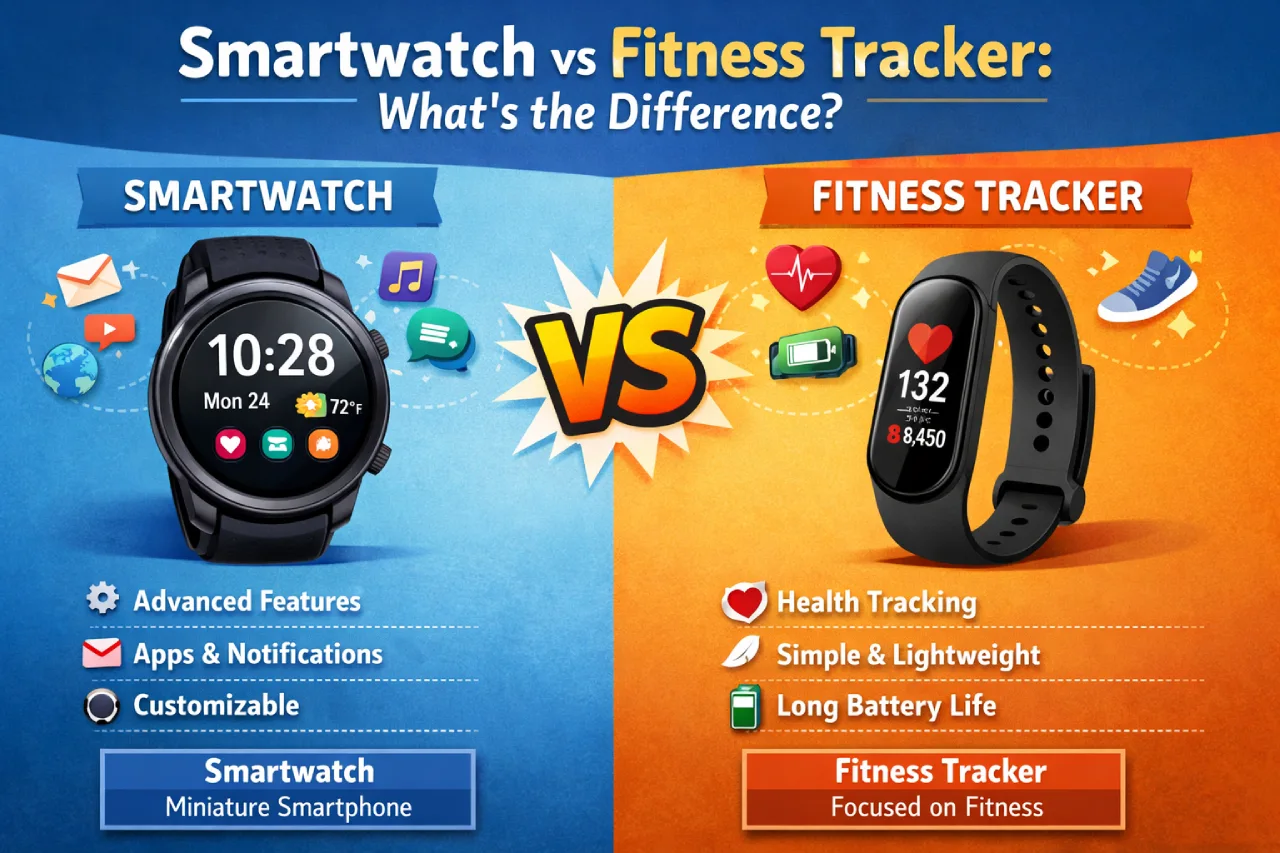
Choosing between a smartwatch and a fitness tracker can be confusing. They look similar, track health data, and often overlap in features. But they are designed for different types of users and daily routines.
This guide explains the real differences between smartwatches and fitness trackers, how each one is used, and which option makes more sense depending on your lifestyle.
Table of Contents
What Is a Smartwatch?
A smartwatch is a wrist-worn device designed to extend your phone’s functionality. It focuses on communication, apps, and daily convenience, with fitness tracking included as a secondary feature.
Most modern smartwatches can:
- Show and respond to notifications
- Make and receive calls (with phone or cellular models)
- Support apps like maps, payments, music, and calendars
- Track basic health metrics such as heart rate, activity, and sleep
Examples include Apple Watch, Samsung Galaxy Watch, and Wear OS watches.
Smartwatches are best suited for users who want an all-in-one digital companion on their wrist.
What Is a Fitness Tracker?
A fitness tracker is designed primarily for health, exercise, and activity tracking. It focuses on collecting accurate fitness data while keeping the device simple, lightweight, and power efficient.
Most fitness trackers can:
- Track steps, workouts, and calories
- Monitor heart rate and sleep
- Support swimming and basic sports modes
- Last several days or even weeks on one charge
Some models also include GPS and limited notifications, but apps and advanced smart features are usually minimal or absent.
Fitness trackers are ideal for users who care more about health data and battery life than apps or messaging.
Key Differences at a Glance
| Feature | Smartwatch | Fitness Tracker |
|---|---|---|
| Main focus | Apps, communication, daily tasks | Health and activity tracking |
| Battery life | 1–2 days (usually) | 5–14+ days |
| App support | Full app ecosystem | Very limited or none |
| Calls & messages | Yes (most models) | Notifications only |
| Size & weight | Larger, heavier | Smaller, lighter |
| Price range | Usually higher | Usually more affordable |
Battery Life: One of the Biggest Differences
Battery life is one of the clearest distinctions.
- Smartwatches typically last one to two days because they power large displays, apps, and background processes.
- Fitness trackers often last a week or longer by limiting features and screen usage.
If you dislike charging daily, a fitness tracker is usually the better choice.
Fitness and Health Tracking Accuracy
Both device types can track basic metrics such as steps and heart rate. However, fitness-focused devices often prioritize consistency and endurance over features.
Fitness trackers and fitness-first watches usually offer:
- Longer continuous heart rate tracking
- Dedicated workout and swim modes
- Better battery performance during GPS activities
Smartwatches still provide solid health tracking, but their strength lies in versatility, not specialization.
Design and Comfort
Fitness trackers are usually:
- Slimmer
- Lighter
- Easier to wear during sleep or workouts
Smartwatches tend to be:
- Larger
- Heavier
- More customizable in style
For smaller wrists or all-day comfort, many users prefer fitness trackers or compact fitness-focused watches.
Waterproofing and Swimming
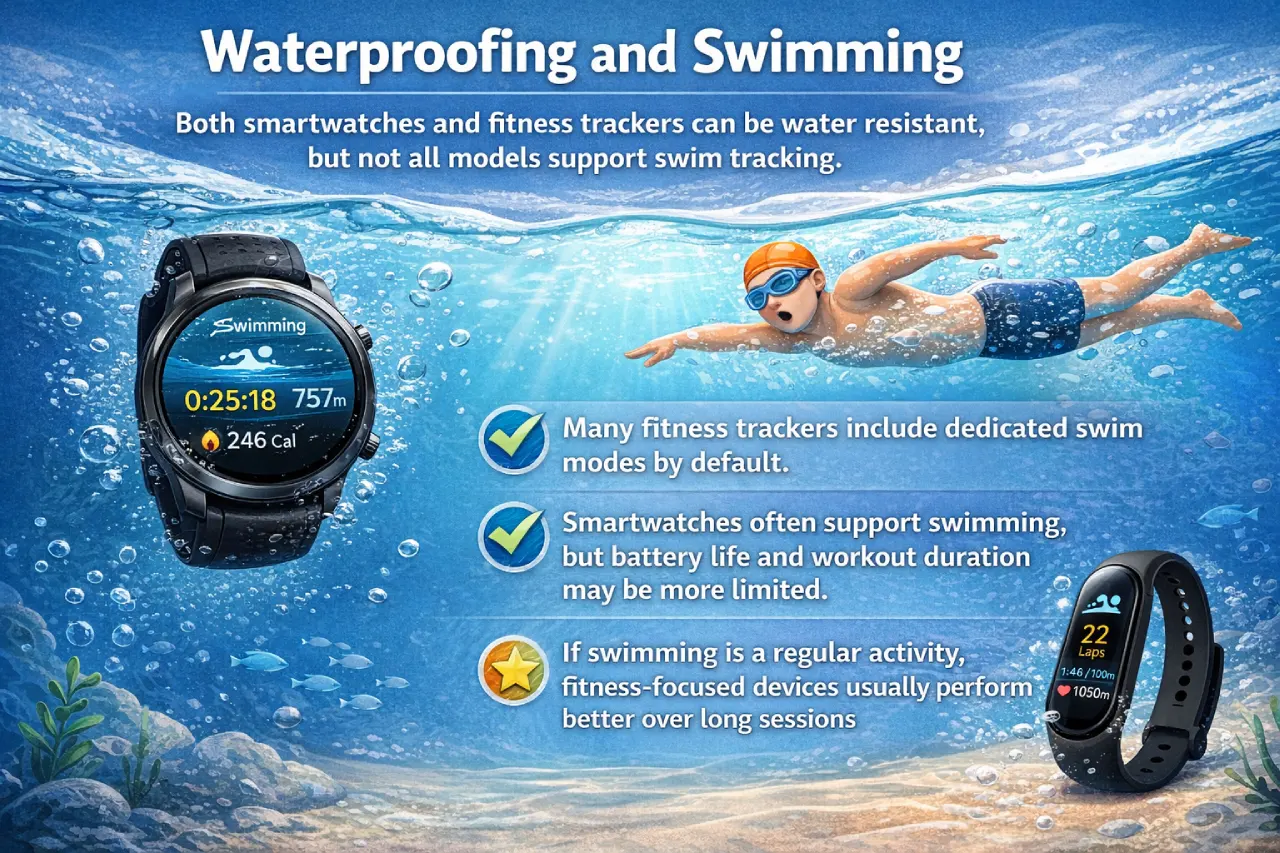
Both smartwatches and fitness trackers can be water resistant, but not all models support swim tracking.
- Many fitness trackers include dedicated swim modes by default.
- Smartwatches often support swimming, but battery life and workout duration may be more limited.
If swimming is a regular activity, fitness-focused devices usually perform better over long sessions.
Which Should You Choose?
Choose a smartwatch if you want:
- Calls, messages, and apps on your wrist
- Strong phone integration
- A single device for daily life and light fitness
Choose a fitness tracker if you want:
- Longer battery life
- Focused health and workout tracking
- A lighter, simpler device
There is no universally better option. The right choice depends on how you plan to use it every day.
How This Relates to Our Smartwatch Guides
If you’re still deciding, these comparisons may help narrow your choice:
- Best Smartwatches for Women – focuses on comfort, safety, and daily usability
- Best Smartwatches Under $50 – highlights affordable options with essential features
- Best Waterproof Fitness Smartwatches – covers devices designed for swimming and endurance workouts
- Best Smartwatches for Men – focuses on performance, durability, battery life, and everyday usability for work, fitness, and outdoor activities
Each guide is built around different needs, not just price or brand.
Final Thoughts
Smartwatches and fitness trackers serve different purposes, even though they often look similar.
Smartwatches are better for staying connected and managing daily tasks. Fitness trackers are better for long battery life and consistent health tracking.
Understanding this difference makes it much easier to choose a device you’ll actually enjoy wearing.