
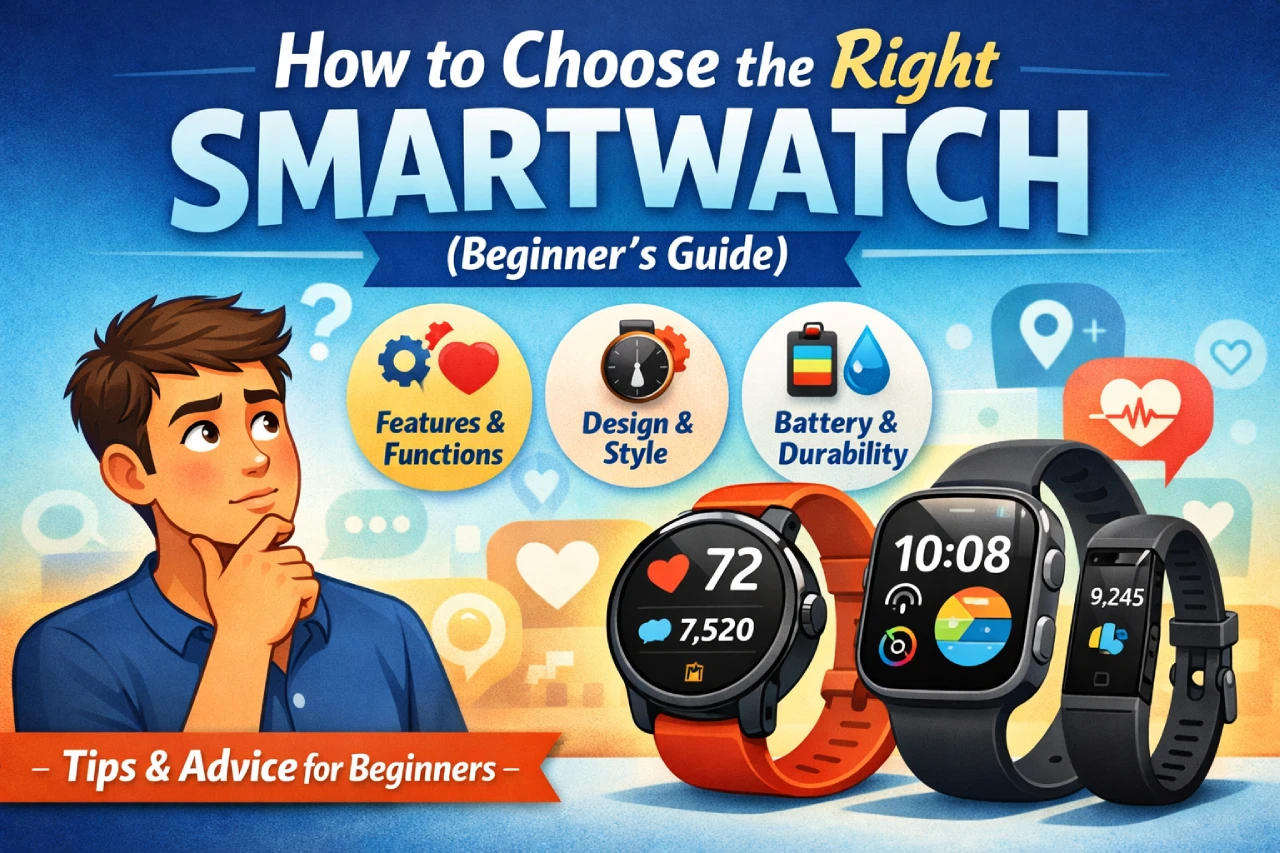
Choosing a smartwatch can feel confusing if you’re buying one for the first time. There are dozens of models, different operating systems, big price gaps, and features that sound useful but may not matter to you at all.
The right smartwatch is not the one with the longest feature list. It’s the one that fits your phone, your daily routine, and how often you actually plan to use it.
This beginner’s guide breaks down what really matters, what you can ignore, and how to choose a smartwatch you won’t regret buying.
Table of Contents
- Start With Phone Compatibility (Most Important)
- Decide What You Want the Watch to Do
- Battery Life Expectations (Be Realistic)
- Health and Fitness Features Explained
- Comfort, Size, and Wrist Fit
- Waterproof Ratings Explained Simply
- Budget vs Premium: What You Actually Get
- Smart Features vs Fewer Distractions
- Common Mistakes Beginners Make
- Quick Decision Guide
- FAQs
- Final Thoughts
Start With Phone Compatibility (Most Important)
Smartwatches are designed to work closely with your phone. If you choose the wrong ecosystem, many features simply won’t work.
- iPhone users get the best experience with Apple Watch models
- Android users have strong options from Samsung, Garmin, Fitbit, and others
- Apple Watches do not fully support Android phones
- Some Android watches offer limited features on iPhone
Before looking at price or design, make sure the smartwatch is fully compatible with your phone.
Decide What You Want the Watch to Do
Not all smartwatches are built for the same purpose. If you’re looking for larger case sizes, stronger durability, or more performance-focused options, our guide to the best smartwatches for men breaks down the top picks for different lifestyles.
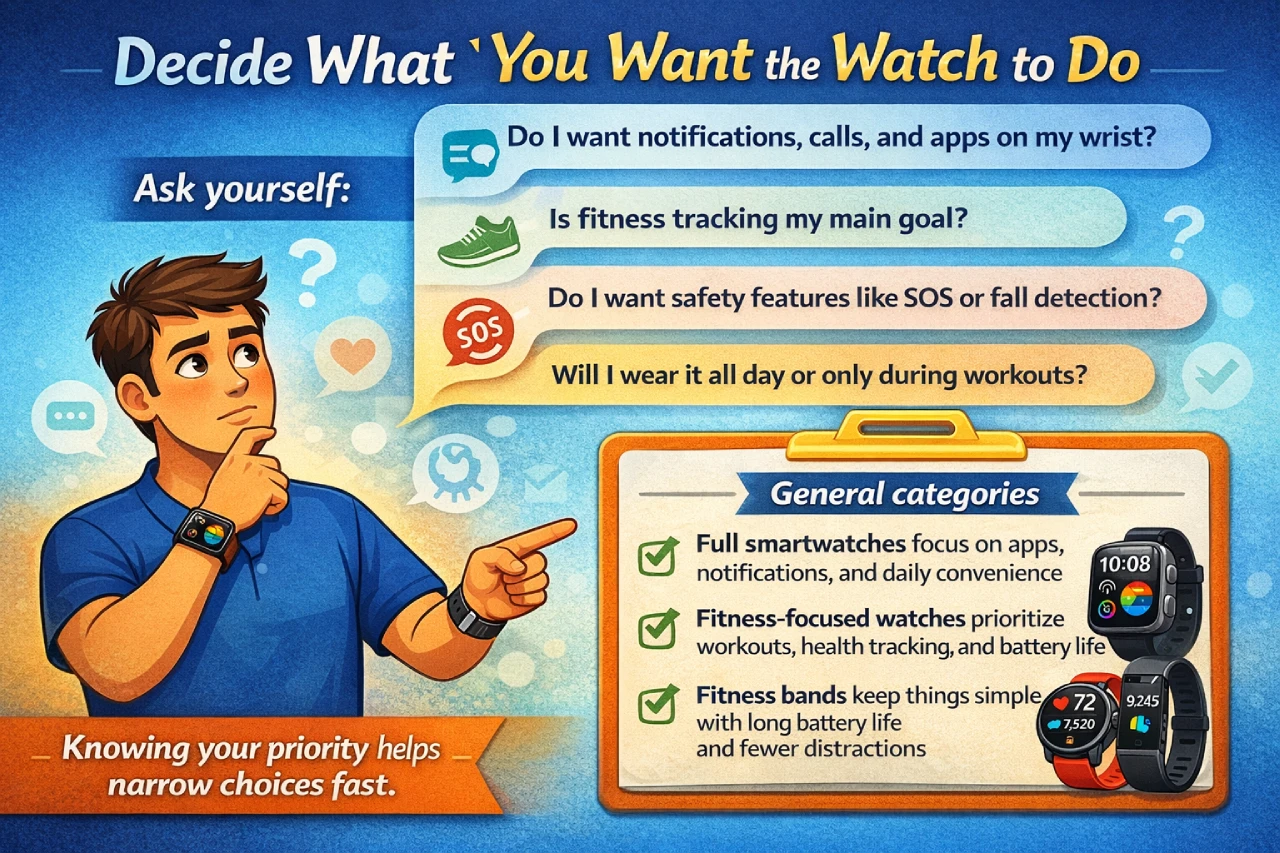
Ask yourself:
- Do I want notifications, calls, and apps on my wrist?
- Is fitness tracking my main goal?
- Do I want safety features like SOS or fall detection?
- Will I wear it all day or only during workouts?
General categories
- Full smartwatches focus on apps, notifications, and daily convenience
- Fitness-focused watches prioritize workouts, health tracking, and battery life
- Fitness bands keep things simple with long battery life and fewer distractions
Knowing your priority helps narrow choices fast.
Battery Life Expectations (Be Realistic)
Battery life varies a lot between models.
- Full smartwatches often last about one day
- Fitness-focused watches may last several days
- Fitness bands can last one to two weeks
If you dislike daily charging, look beyond full smartwatches. Longer battery life usually comes with fewer apps and smart features.
Health and Fitness Features Explained
Most modern smartwatches include basic health tracking, but not all offer the same depth.
Common features:
- Step counting
- Heart rate monitoring
- Sleep tracking
- Workout tracking
Some watches also include:
- GPS for outdoor workouts
- Stress tracking
- Blood oxygen estimates
- Menstrual cycle tracking
- Recovery and readiness metrics
Choose features based on your routine, not marketing labels. Casual users don’t need advanced training metrics.
Comfort, Size, and Wrist Fit
Comfort matters more than most beginners expect. Smaller wrists often benefit from lighter designs and shorter lug-to-lug sizes, which we cover in detail in our guide to the best smartwatches for women.
Things to check:
- Case size (smaller wrists usually prefer smaller cases)
- Weight of the watch
- Band material and adjustability
- Thickness under long sleeves
A smartwatch is only useful if you enjoy wearing it all day.
Waterproof Ratings Explained Simply
Many watches are labeled water resistant, but ratings matter.
- 5 ATM (50 meters) is generally safe for swimming
- Lower ratings are usually fine for sweat and rain
- Not all waterproof watches track swimming
If you plan to swim or train in water, make sure the watch supports swim tracking, not just water resistance. For regular swimming and water-based training, see our comparison of the best waterproof fitness smartwatches, including models built for pool and open-water use.
Budget vs Premium: What You Actually Get
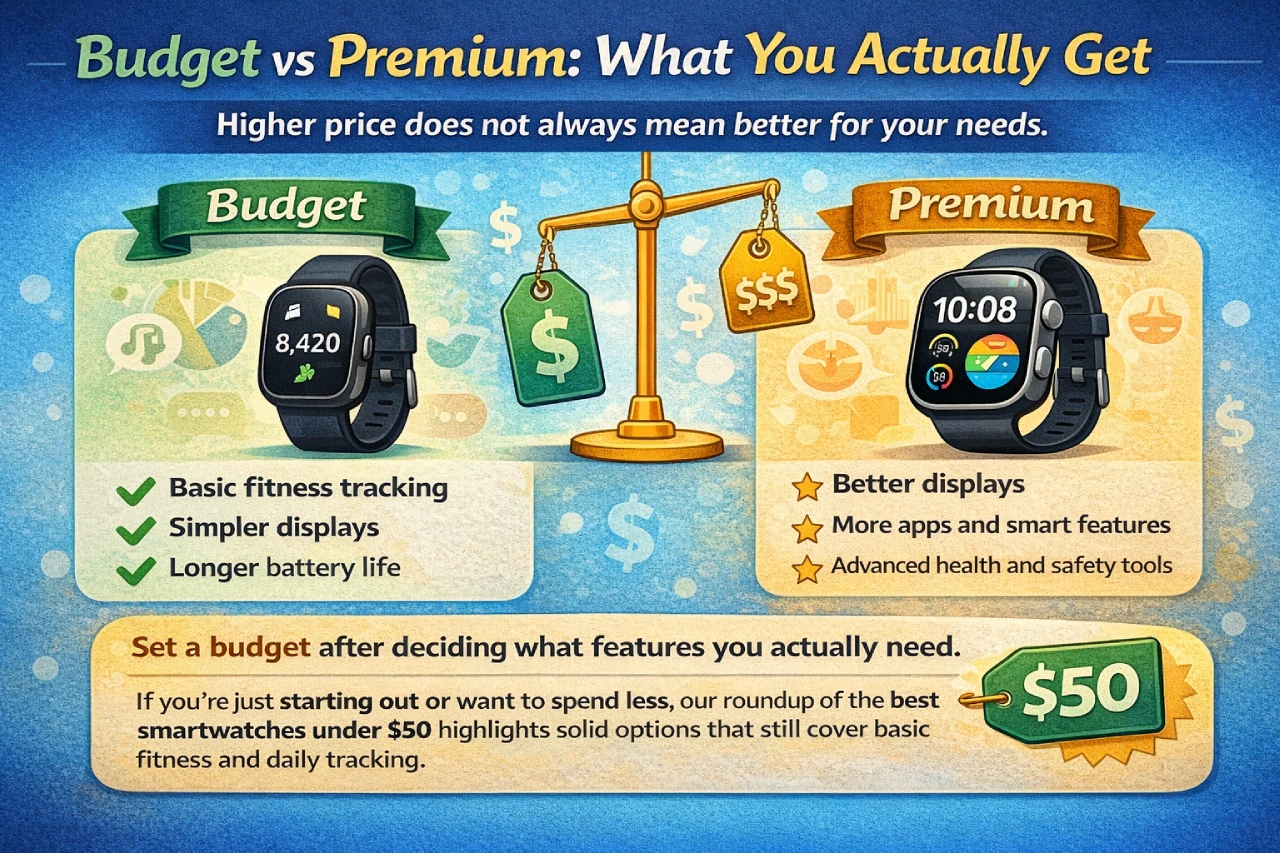
Higher price does not always mean better for your needs.
Budget models usually offer:
- Basic fitness tracking
- Simpler displays
- Longer battery life
Premium models usually offer:
- Better displays
- More apps and smart features
- Advanced health and safety tools
Set a budget after deciding what features you actually need. If you’re just starting out or want to spend less, our roundup of the best smartwatches under $50 highlights solid options that still cover basic fitness and daily tracking.
Smart Features vs Fewer Distractions
Some people love getting calls, messages, and notifications on their wrist. Others find it distracting.
Ask yourself:
- Do I want to respond to messages on my watch?
- Do I want apps, music, and payments on my wrist?
- Or do I prefer a simple fitness companion?
There is no right answer. The best smartwatch is the one that fits your habits.
Common Mistakes Beginners Make
- Buying a smartwatch that doesn’t fully support their phone
- Choosing based on looks only
- Overpaying for features they never use
- Ignoring battery life
- Choosing a watch that feels uncomfortable after long wear
Avoiding these mistakes saves money and frustration.
Quick Decision Guide
- Want the most features and apps → Full smartwatch
- Care mostly about fitness and battery life → Fitness-focused watch
- Want simplicity and long battery life → Fitness band
- Swim or train outdoors → Look for GPS and swim tracking
- Wear it all day → Prioritize comfort and size
FAQs
How much should a beginner spend on a smartwatch?
Most beginners are well served in the mid-range. Expensive models only make sense if you want advanced features.
Do I need GPS in a smartwatch?
GPS is useful if you run, cycle, or walk outdoors without your phone. Otherwise, it’s optional.
Are cheaper smartwatches worth it?
Yes, if they match your needs. Many budget models handle fitness tracking very well.
Can a smartwatch replace my phone?
No. Smartwatches work best as companions, not replacements.
Final Thoughts
Choosing the right smartwatch is about matching features to your real life, not buying the most advanced model available.
Start with phone compatibility, decide what you want the watch to do, and be honest about how often you’ll use advanced features. A smartwatch that fits your routine will always feel like a better purchase than one with features you never touch.
Once you understand these basics, picking the right smartwatch becomes much easier.